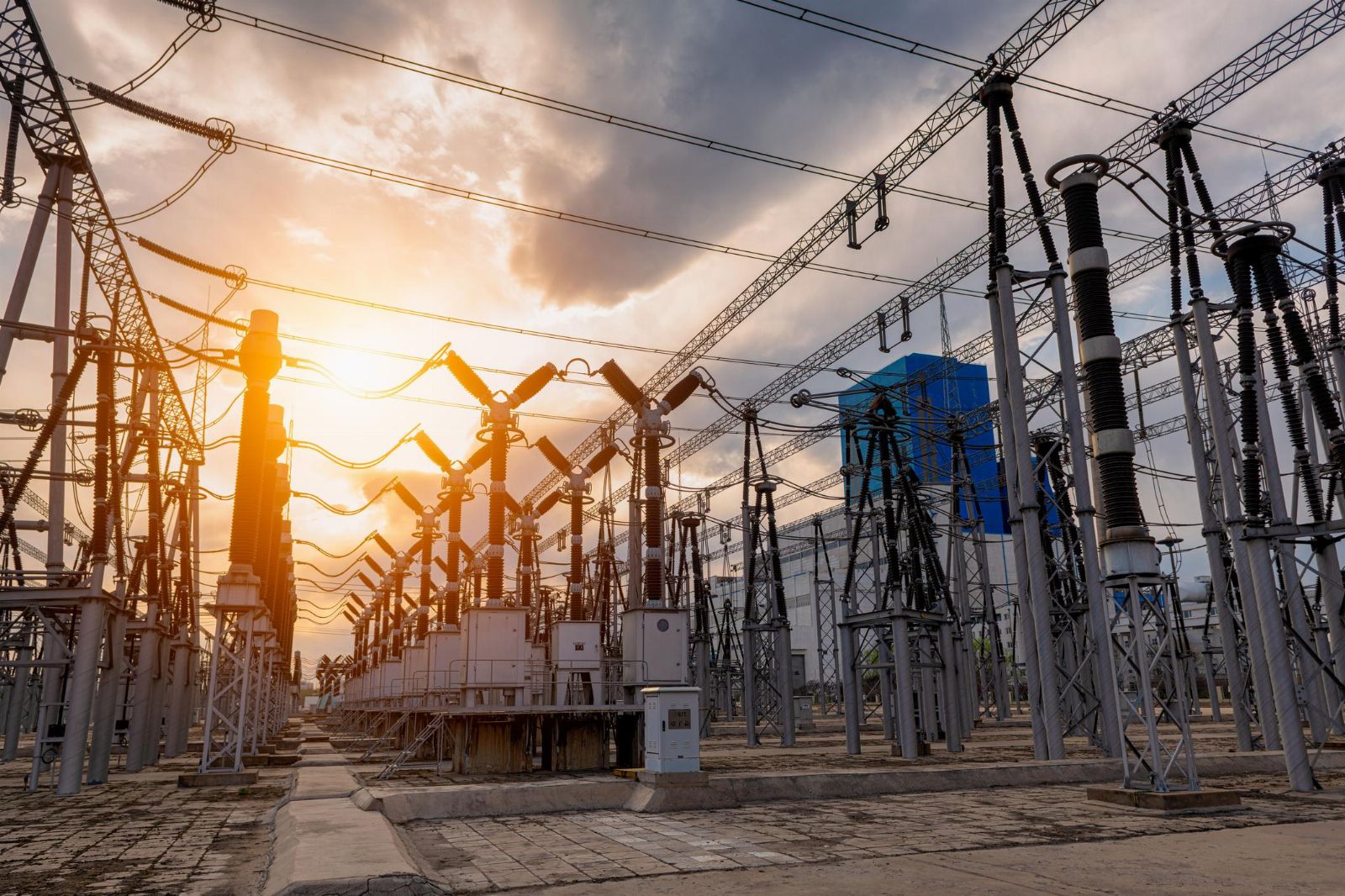
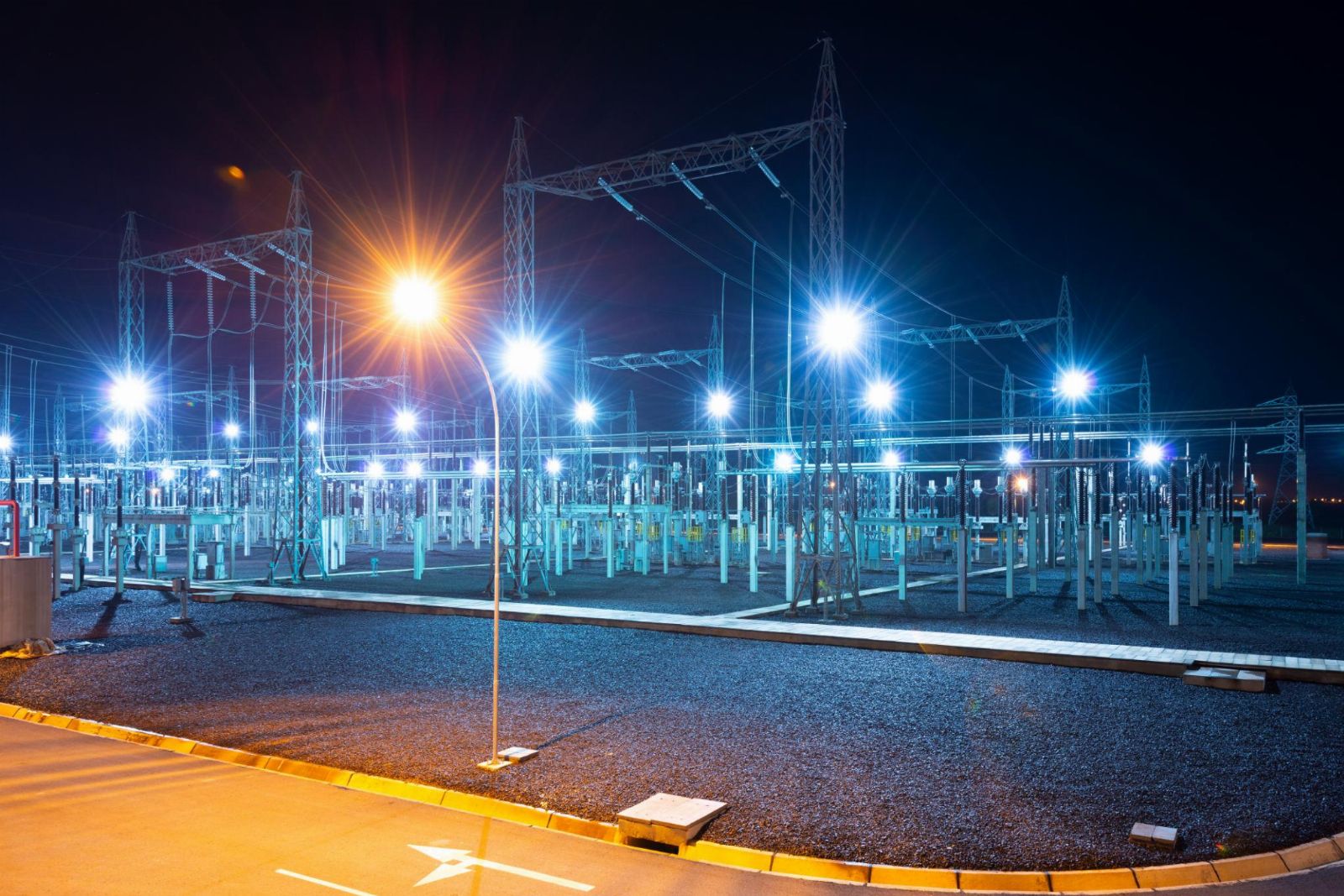
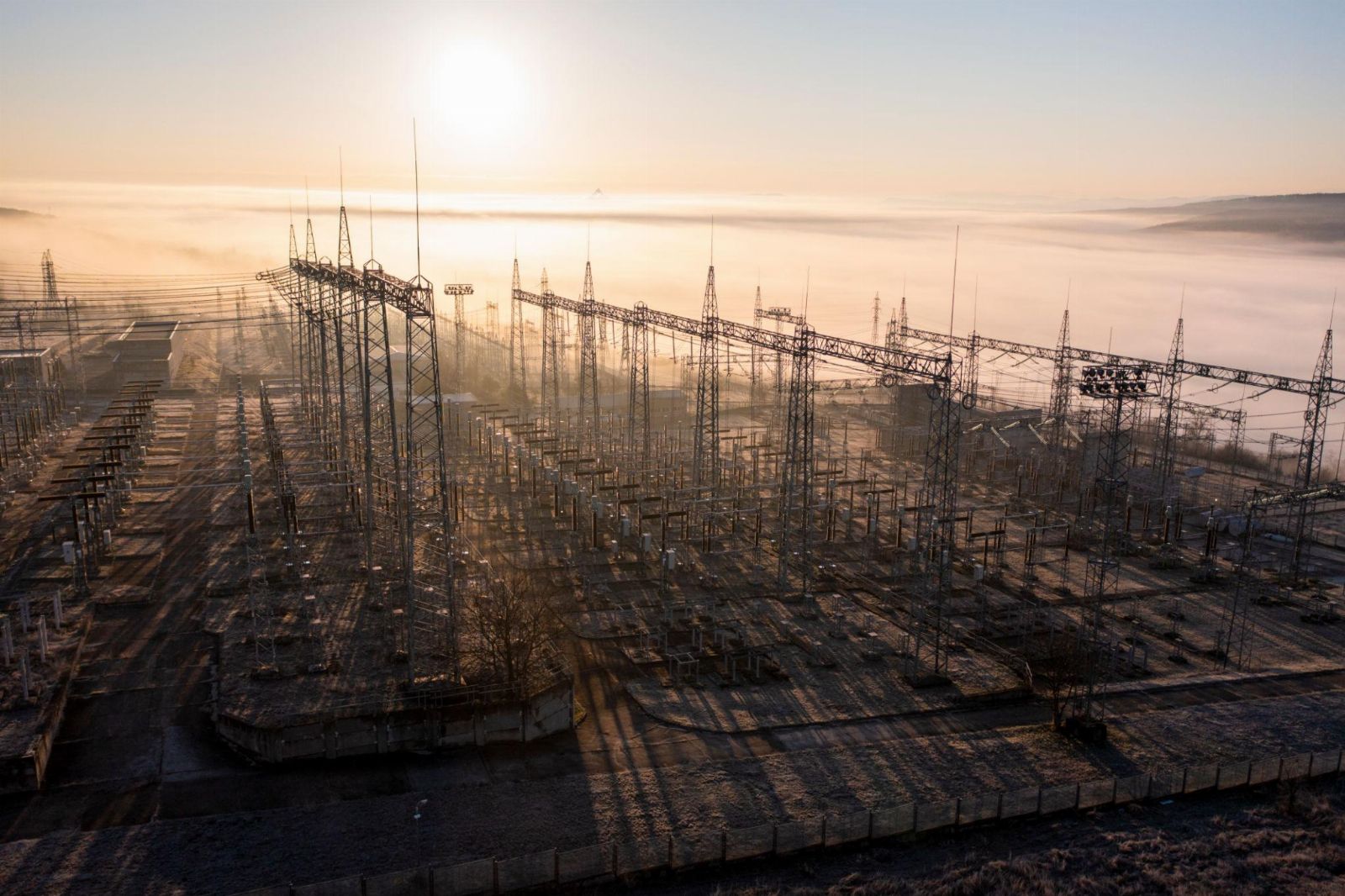
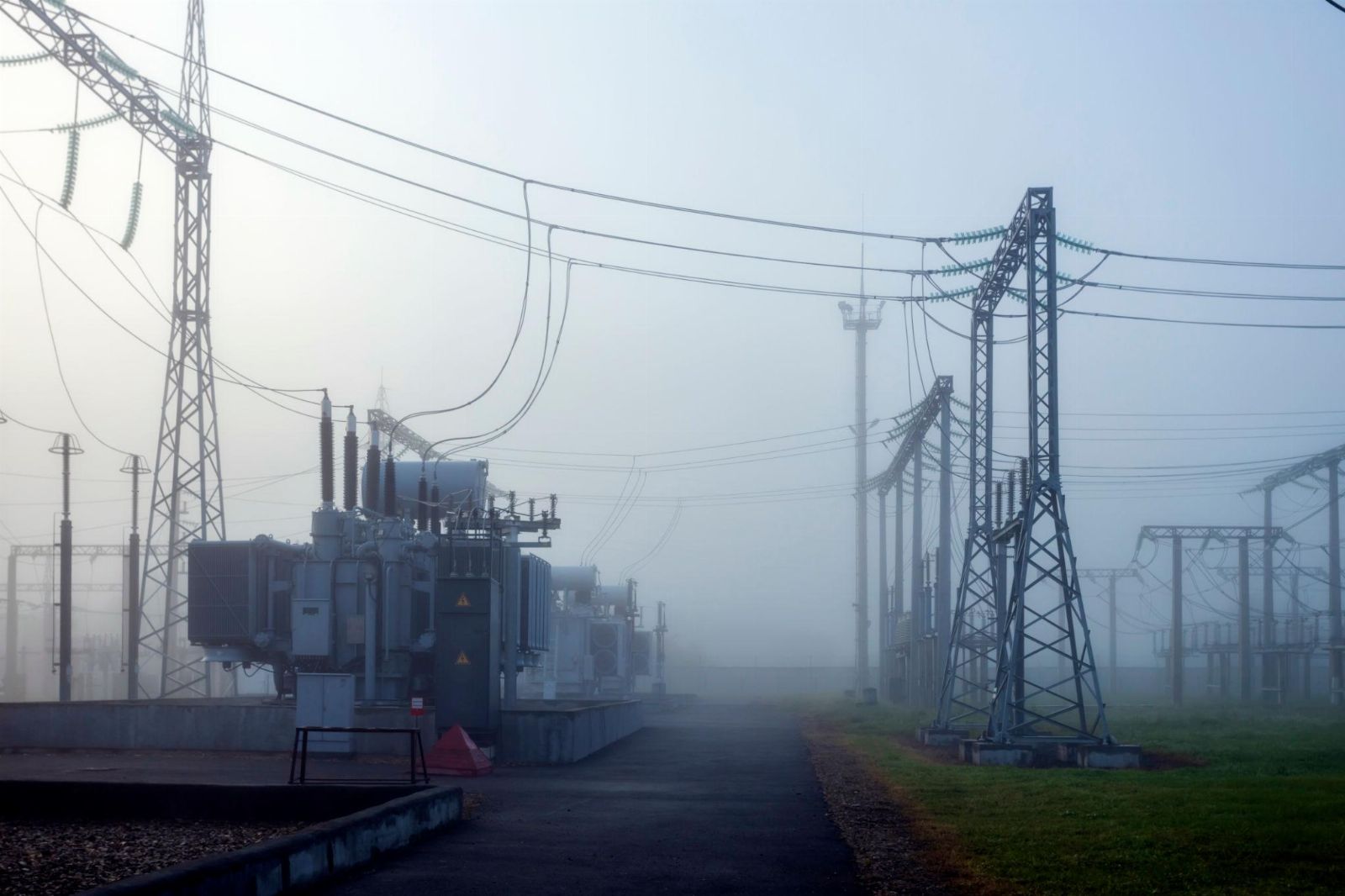
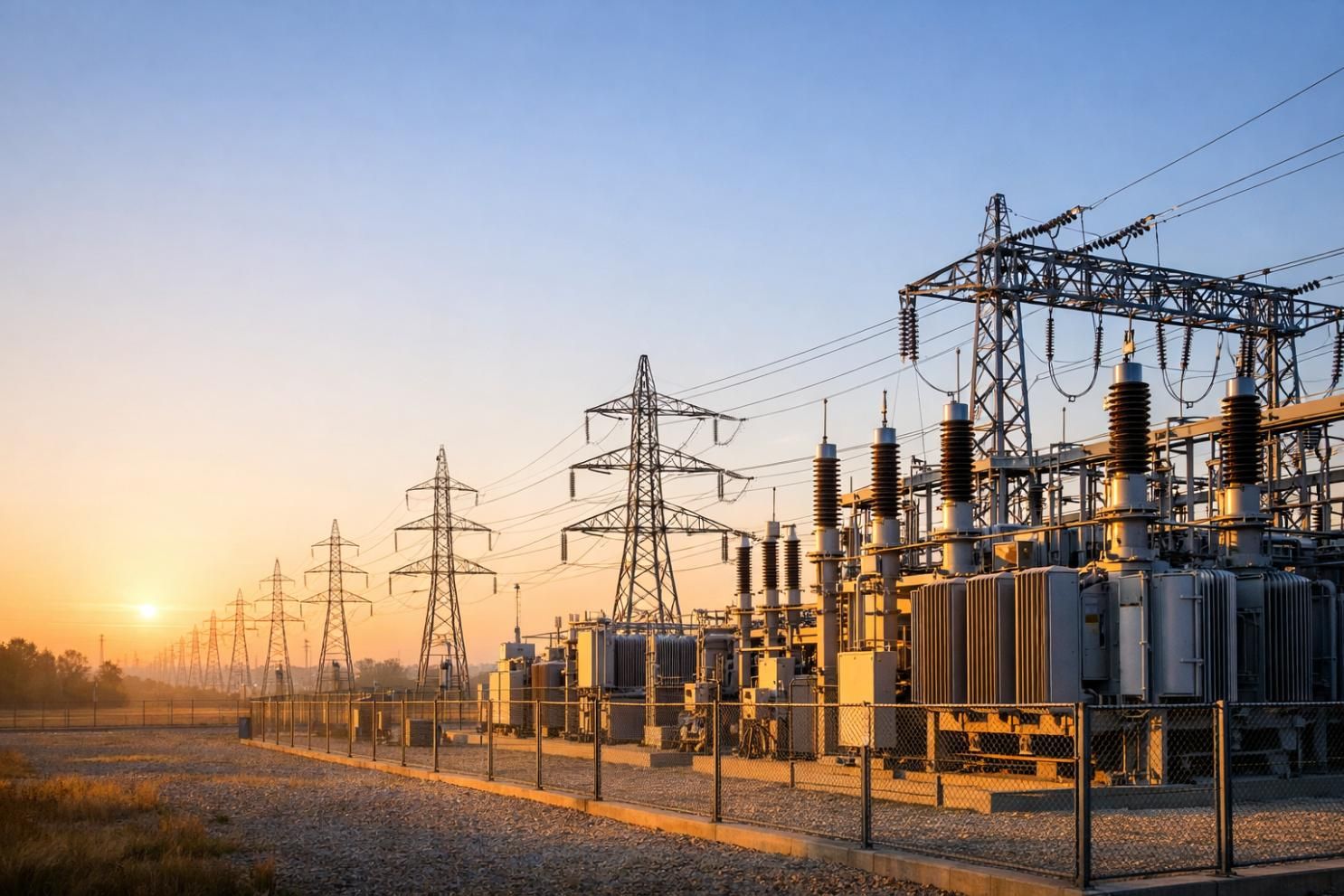
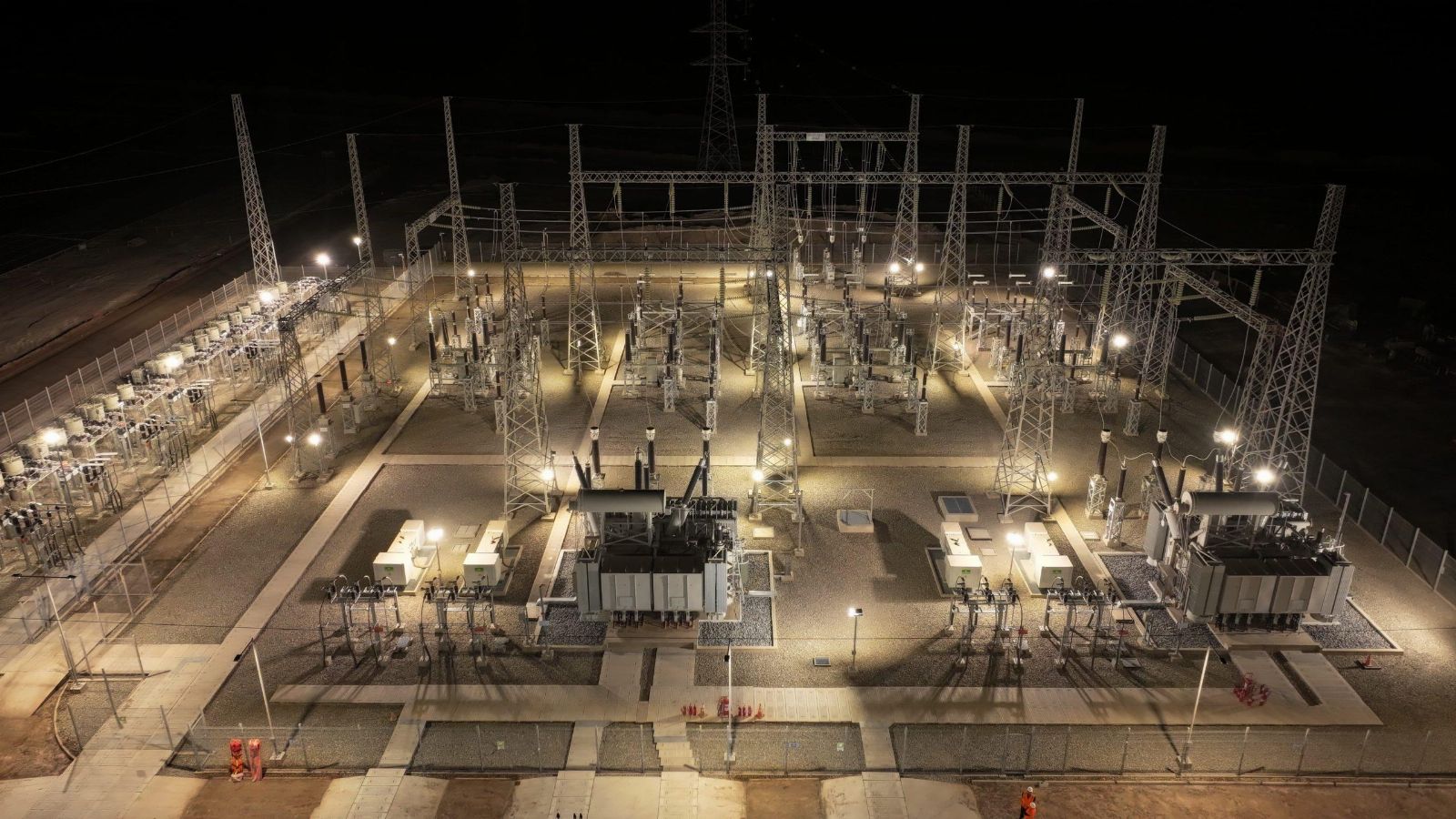
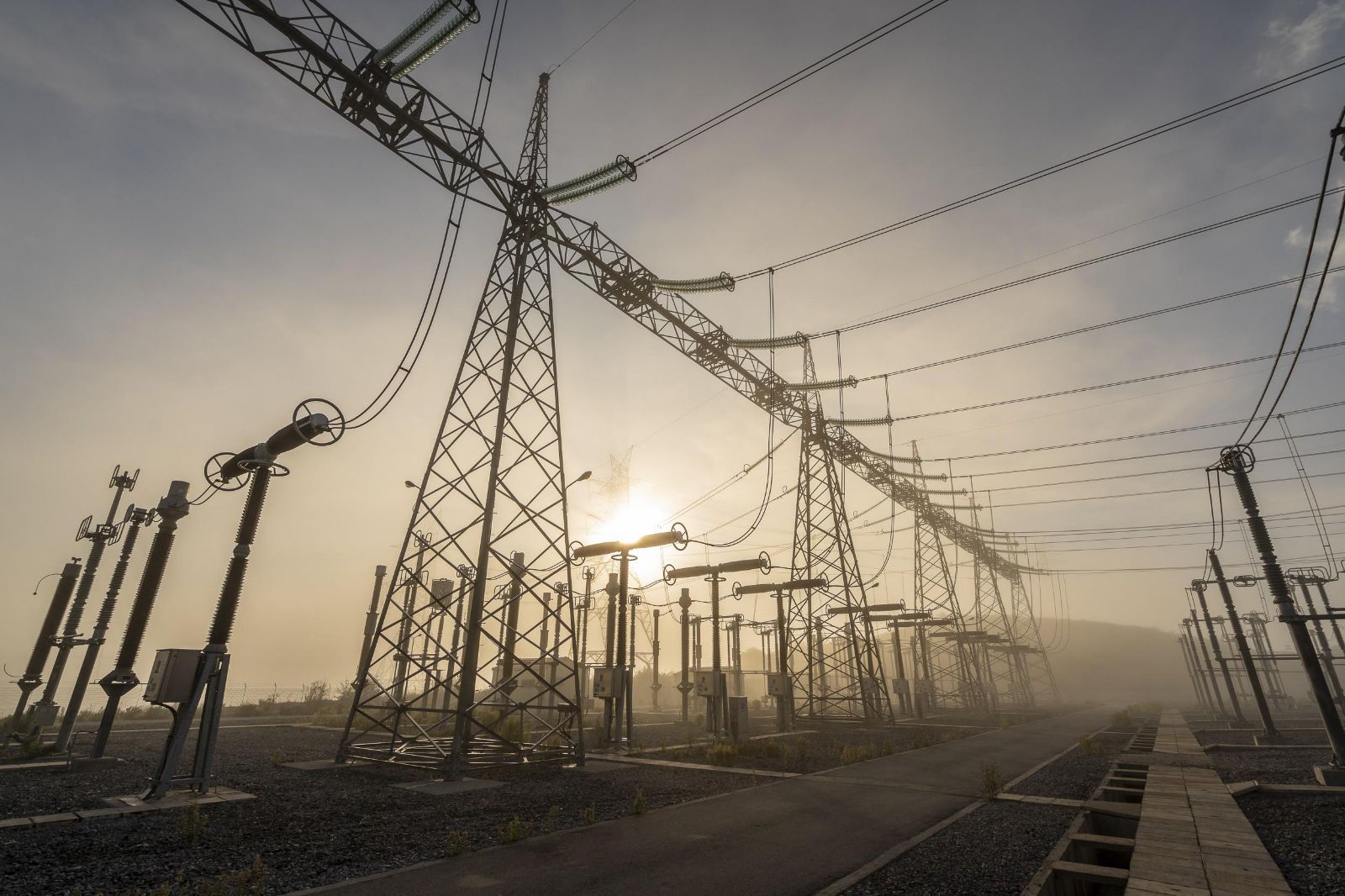
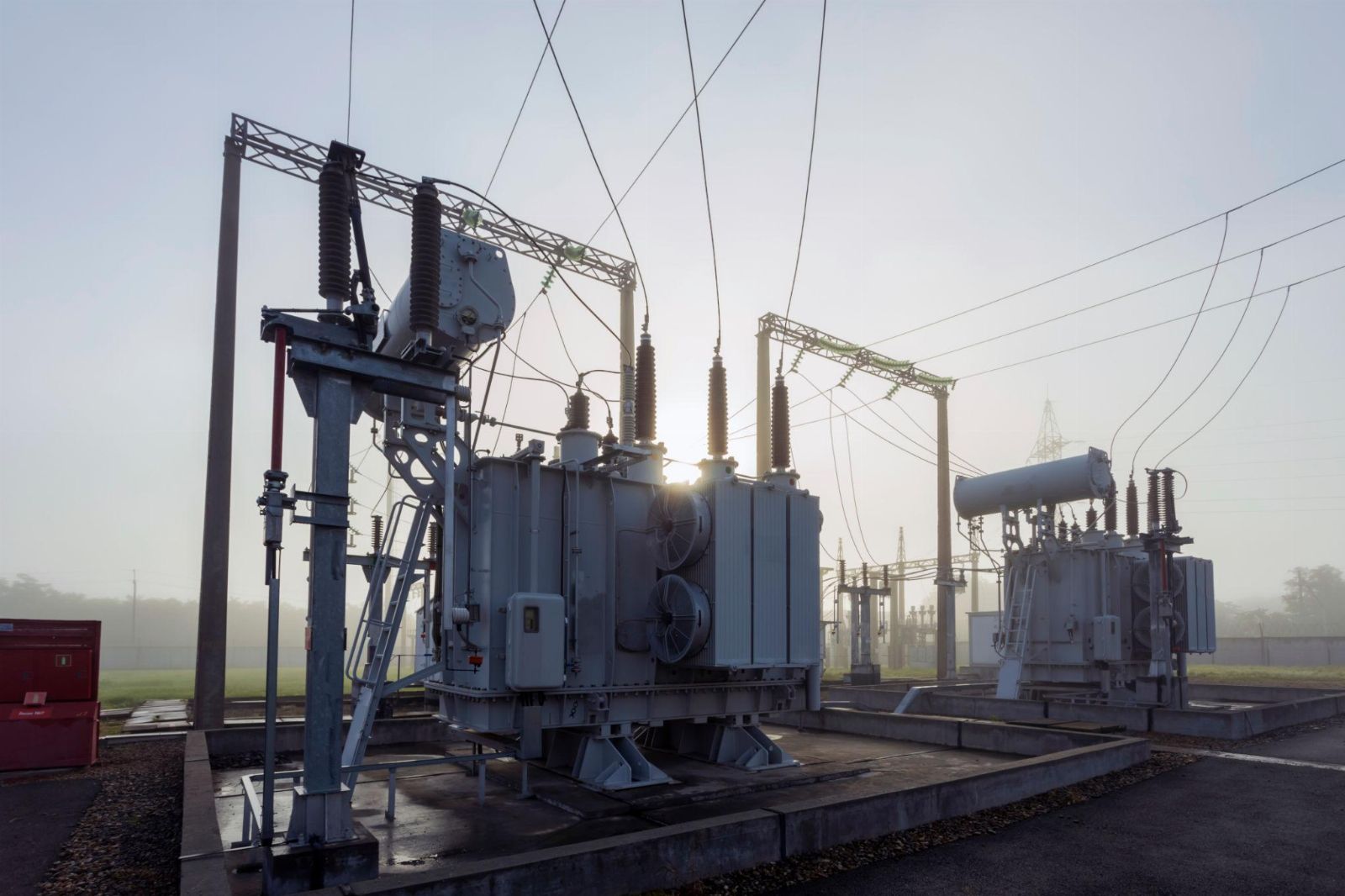
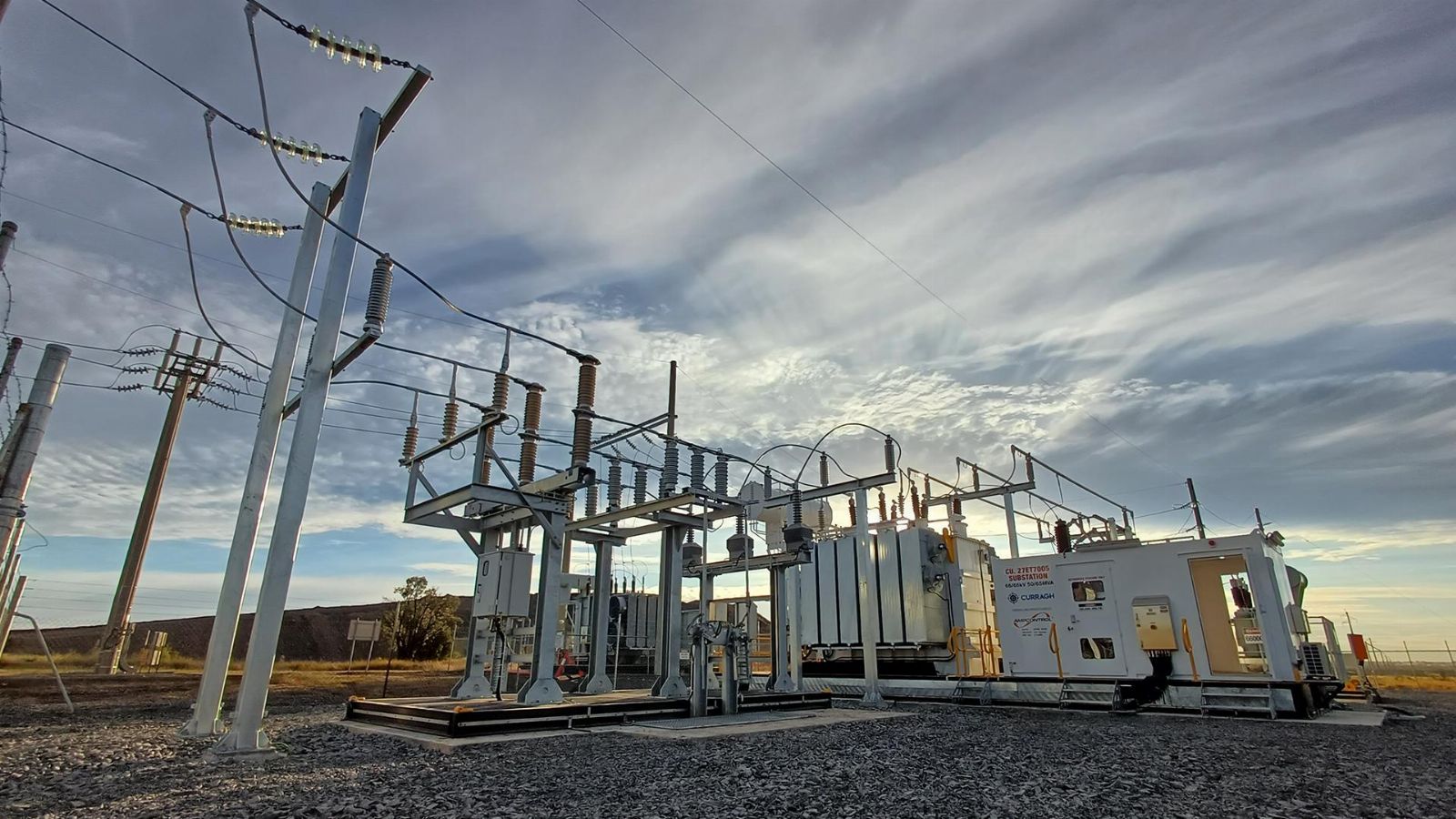
- We offer co-operation on replacement of old installed equipment on equipment at substations with new equipment produced at your factory. We have a large database of documentation for old, end-of-life equipment, and we will adapt your products to replace the old.

- Design of substation equipment in accordance with the technical specifications.

- Design documentation for the manufacture of electrical equipment.

- 3-D models, product drawings, BOM.

- Preparation of technical documentation for participation in tenders.

- Preparation of preliminary standards for material consumption for cost calculation..

- Consulting on projects.

..since August 1998

Proekt-Energo

Area of activity:

- Design of low-voltage, middle-voltage and high-voltage electrical equipment of substations for voltages of 0.4 - 220 kV.
- Development of working documentation in accordance with the technological capabilities of the plant.
- Preparation of preliminary technical documentation for participation in tenders for the supply of equipment.
- Consultations on project approvals.
- Supporting the production of equipment at the plant.

Specialization:

- Switchgear for indoor and outdoor installation for voltages of 6, 10, 20, 35 kV.
- Air-insulated secondary switchgears AIS for voltages 6, 10 kV.
- Complete transformer substations CTS for voltage 10 - 220 kV.
- Disconnectors for voltage 0.4 ... 220 kV.
- Drive to disconnectors.
- Replacement of withdrawable elements and switches in existing switchgear (Retrofit).
- Low-voltage switchgears for voltage 0.4 kV.
- DC 600V switchgears RU-600.

KR-10 MV Switchgear – withdrawable unit replacement (retrofit)

Retrofitting the KR-10 withdrawable unit involves replacing the 6–10 kV cell's withdrawable trolley (WT) with a modern module featuring a vacuum circuit breaker and compatible interface units, while retaining the basic parts of the switchgear: the cabinet housing, busbars, cable connections, and the main layout of the switchgear. For most KR-10 facilities, retrofitting is a practical alternative to complete replacement of the switchgear: the equipment in the building remains in place, and only the “working connection mechanism” is updated — a trolley with a switch, contacts, curtains, interlocks, and a secondary interface. This approach is especially effective when the old switch has reached the end of its service life, scheduled maintenance becomes unpredictable, the plug-in unit overheats, or problems arise with interlocks and curtains.

Page navigation

Where KR-10 is used and when VE replacement is needed

KR-10 is widely used in 6–10 kV switchgear at industrial enterprises, substations, and infrastructure facilities where maintainability and prompt maintenance of connections are important. The need to replace the withdrawable unit usually arises when the following signs appear:

  • increased time required for circuit breaker maintenance and “floating” repair volume from inspection to inspection;
  • burning/heating of the plug-in unit, traces of thermal impact on contact parts;
  • unstable trolley adjustment: the need to “press down,” the appearance of backlash, skewing when rolling in;
  • problems with curtains: incomplete closure, jamming, loss of clear kinematics;
  • Reduced reliability of interlocks and limit switches (false prohibitions or, conversely, lack of prohibition).

What retrofitting offers: operational advantages

  • Transition to vacuum switching — reduction of labor-intensive regulations and increase in operational resources.
  • Normalization of the contact assembly — restoration of reproducible contact pressure and reduction of the risk of local overheating.
  • Predictable mechanics — fine-tuned adjustment, fixed trolley positions, and clear locking logic.
  • Reduced downtime — delivery of the assembled switchgear transfers the main adjustments and checks to the factory stage, leaving only installation and commissioning at the site.
  • Readiness for secondary modernization — easier to implement arc protection, relay protection and automation terminals thanks to a streamlined secondary interface.

KR-10 roll-out element: composition and key components

The KR-10 roll-out element is a set of components that determine the safety of maintenance, thermal conditions, and connection stability during emergency modes. As part of the retrofit, a new VE (usually assembled) is formed, including:

  • Trolley frame with bases that ensure repeatable roll-in geometry, without skewing or “wandering” elevation marks.
  • 6–10 kV switch of the vacuum type (alternative — SF6 according to technical specifications) with drive; readiness circuits, block contacts, and manual controls are provided according to the design.
  • Primary plug-in contacts with adapters for the mating parts of a specific KR-10 cell: the insertion depth, contact travel, and required contact force are fixed.
  • Adjustment and locking mechanism that moves the trolley from the “test” to the “working” position with controlled pressure, eliminating under-adjustment.
  • Curtains (or assemblies interacting with cell curtains) for automatic closure of current-carrying parts during roll-out.
  • Locks and position sensors: prevention of erroneous operations and limit switches for “repair/test/working” positions.
  • Secondary interface: connector/terminal module for connecting control, signaling, and relay protection circuits.

Compatibility with the cell: main circuits, mechanics, curtains

KR-10 comes in different versions and with object modifications, so retrofitting is performed with reference to a specific cell. Main compatibility points:

  1. Main circuit: plug-in node geometry, phase alignment, contact pressure, dielectric distances, transition resistance control.
  2. Movement mechanics: type of guides/rollers, stops, locks, trolley stability, and absence of misalignment along the trajectory.
  3. Curtain mechanism: guaranteed coverage of plug-in unit openings when switching to “repair” mode, no jamming or spontaneous opening.

If a grounding device is present in a specific KR-10 configuration, the “switch-trolley-grounding device” interlocks and restrictions on the sequence of operations are linked.

Secondary circuits: connector and control logic connection

For successful replacement of the power unit, it is important to ensure correct connection of secondary circuits without “re-soldering” and chaotic modifications at the facility. Three typical scenarios are used:

  • “1:1” connector — a complete replica of the existing connector and pinout; minimal installation work.
  • Transitional pinout — adapter/strip with a circuit correspondence table (I/O matrix), marking and signaling logic are preserved.
  • Replacement of the mating part — in case of contact wear or function expansion (control of shutdown circuits, addition of arc protection, new telemechanics signals).

Technical data (typical)

ParameterValue for KR-10 retrofitNote
Voltage class 6–10 kV For 6/10 kV, 50 Hz networks
Maximum operating voltage 7.2 kV / 12 kV Depending on the selected circuit breaker
Rated current of main circuits 630 / 1000 / 1600 A According to the design and thermal calculation of the contact assembly
Rated breaking current 20 / 25 / 31.5 kA Selection based on calculated short-circuit currents
Thermal withstand current 20 / 25 / 31.5 kA (typ. 3 s) Main circuit parameters
Trolley positions repair / test / working With locking and interlocks
Switch drive spring-motor / electromagnetic Selection based on operating power supply and modes
Control circuit voltage 110/220 V AC/DC Other options — by agreement
Secondary interface 1:1 connector / adapter pinout / replacement of mating part For actual control and relay protection and automation schemes
Climatic design U1 / UHL1 According to GOST 15150 or site requirements

How KR-10 retrofit is performed: work algorithm

  1. Cell inspection: photo documentation, measurements, determination of the contact system type, assessment of curtains, interlocks, and secondary connectors.
  2. Designing the connection: contact adapters, kinematics of the adjustment, list of interlocks, table of correspondence of secondary interface circuits.
  3. VE assembly: switch installation, adjustment of fine-tuning and interlocks, checking of secondary circuits and signals.
  4. On-site installation: installation of trolley, connection of secondary circuit, control measurements of main circuit, checking of curtains.
  5. PNR: functional check of interaction with RZA, correctness of shutdown, signaling, and (if necessary) telemechanics.

Quality control and measurements (important for 6–10 kV)

To prevent overheating and “floating” blockages, it is recommended to accept the KR-10 retrofit based on the following measurable criteria:

  • micro-ohmmetry of the transition resistance of the main circuit after several roll-in/roll-out cycles;
  • checking the adjustment and fixing of positions with control of limit switches;
  • checking the curtains and interlocks for correct sequence of operations;
  • functional checks of secondary circuits: switching on/off, position signals, interlock circuits, and disconnection from the relay protection and automation system.

The result is protocols and a list of settings (limit switches, interlocks, pinouts), which makes further operation predictable.

Options and functionality expansion

  • arc protection (optics + current criterion) for accelerated arc shutdown;
  • RZA modernization: terminals, UROV/APV according to the project, recording of oscillograms and events;
  • status monitoring: operation counter, resource assessment, control of operating circuit voltage;
  • integration into ACS/SCADA: remote signaling and remote control according to the project (if a terminal/gateway is available).

We offer you documentation for replacing the KR-10 roll-out element (retrofit):

- Preliminary technical documentation for participation in tenders for the replacement of the KR-10 roll-out element (6–10 kV). We will prepare the necessary information for you to assess the possibility of manufacturing products in accordance with the requirements of the tender documentation and questionnaires. - Working drawings, 3-D models, and other necessary documentation for the manufacture of the KR-10 roll-out element at your enterprise. If you do not plan to manufacture the product components and parts yourself, we will help you outsource their manufacture to third-party enterprises. Your enterprise will perform the final assembly and installation of the product. All documentation will be adjusted, if necessary, in accordance with the project requirements and the technological capabilities of your enterprise.
- If equipment from another manufacturer is installed at the substation, we will prepare documentation for the manufacture of similar equipment in addition to the installed equipment.

Advantages of working with us:

- Link to your specific KR-10 cell: contacts, fine-tuning, curtains, locks, and secondary interface are designed as a controlled technical solution.
- Minimization of downtime due to factory preparation of the assembled VE and a clear installation/PNR algorithm.
- Quality control methods (micro-metrology, interlock testing, pinout certification) increase operational predictability.

For more information on replacing the KR-10 roll-out element (retrofit), please contact: inbox@proekt-energo.com

PDF - Download technical information on replacing the KR-10 roll-out element

pdf

KRU-2-10-3150 MV Switchgear – withdrawable unit replacement (retrofit)

Retrofit of the KRU-2-10 roll-out element involves replacing the connection trolley (VE) in 6–10 kV cells for currents of 2000–3150 A with the installation of a modern circuit breaker and updated interface units while retaining the KRU cabinet: busbars, cable connections, main metal structures, and switchgear layout. Unlike “universal” solutions for 630–1600 A, the KRU-2-10 retrofit in the 2000–3150 A range places increased demands on the contact system and thermal regime: repeatability of adjustment, contact force, contact surface quality, and coordination of current-carrying parts with the existing busbar are critical. Therefore, a correct design begins with an inspection of a specific cell and confirmation of the main circuit parameters by measurements (including micro-ohmmetry) and heating calculations.

Page content

When is retrofitting KRU-2-10 most appropriate?

  • Input and sectional connections with currents of 2000–3150 A, where downtime is unacceptable and the service life of the circuit breaker/trolley already limits the reliability of the switchgear.
  • Overheating of the plug-in unit and traces of thermal impact on contact parts: this is a typical “trigger” for replacing the switchgear in a high-current design.
  • Worn adjustment and fixation: failure to adjust at high currents quickly leads to an increase in contact resistance and accelerated aging of the contacts.
  • Inability to maintain old equipment: shortage of spare parts, lengthy repairs, lack of factory regulations for the actual condition.
  • Transition to modern relay protection and automation and requirements for event recording/remote control without reconstructing the entire switchgear.

KRU-2-10 withdrawable unit: what exactly is being replaced

The withdrawable unit in the KRU-2-10 is a functional connection module that combines power switching and safe cell maintenance. During retrofitting, as a rule, the entire withdrawal unit is replaced, not just the circuit breaker, since at currents of 2000–3150 A, “interfaces” and mechanics play a significant role:

  • Trolley (frame) with bases for the circuit breaker, guides/rollers, fixing and adjustment assemblies.
  • 6–10 kV switch of the vacuum type (or SF6 according to the technical specifications) with a drive and a set of contact blocks.
  • Primary plug-in contacts for high current loads with adapters for fixed contacts of a specific KRU-2-10 cell.
  • Current-carrying jumpers/buses on the trolley (if available in the design), rated for 2000–3150 A in terms of heating and short-circuit dynamics.
  • Curtain mechanism and elements to protect against access to current-carrying parts when the trolley is rolled out.
  • Locks and limit switches for the “repair/test/operating” positions, prohibiting erroneous operations.
  • Secondary interface (connector/terminal module) for control, signaling, and relay protection circuits.

Features of 2000–3150 A currents: contacts, heating, adjustment

High main circuit currents in KRU-2-10 place increased demands on each element of the plug-in connection. The following points are essential for retrofitting in the 2000–3150 A range:

  • Contact force and geometry: the pressure must be reproducible with each insertion cycle. Any misalignment at these currents quickly manifests itself in overheating and increased contact resistance.
  • Quality of contact surfaces: the material, coating, condition of the contact lamellas/fingers, and absence of local defects are critical for stable thermal conditions.
  • Thermal decoupling and heat dissipation: the design takes into account the heating of the contact area, the location of current-carrying parts relative to screens/partitions, as well as the ventilation conditions in the compartment (depending on the cabinet design).
  • Mechanical rigidity of the trolley: skewing of the trolley during rolling in can result in uneven contact between phases — this is a direct path to local overheating of one phase and accelerated wear.
  • Resistance to dynamics during short circuit: the current-carrying parts of the switchgear, fastenings, and contact assembly must withstand electrodynamic forces without “opening” the contact and without residual deformation.

That is why, when retrofitting KRU-2-10 2000–3150 A, it is recommended to set measurable quality criteria: micro-ohm measurement of the main circuit, verification of repeatability of adjustment, and control of trolley position locking.

Compatibility with the cell: mechanics, curtains, secondary interface

The correct replacement of the KRU-2-10 roll-out element must be carried out without “rearranging” the cabinet. To do this, the following interfaces must be compatible:

  1. Mechanical: guides, stops, fasteners, kinematics of adjustment, access to controls, stability of the trolley in extreme positions.
  2. Power: mating of plug-in contacts with fixed contacts of the cell, compliance with height marks and insertion depth, dielectric distances.
  3. Curtain: automatic closure of current-carrying part openings when rolling out, no jamming, access blocking in case of incorrect position.
  4. Secondary: connection via a compatible “1:1” connector, via an adapter or by replacing the mating part of the connector (in case of contact wear or function upgrade).

If a grounding device is available, the “trolley-switch-grounding device” interlocks are coordinated to eliminate conflicting positions and ensure a safe sequence of operations.

Technical data (typical)

ParameterValue for KRU-2-10 retrofitNote
Voltage class 6–10 kV For 6/10 kV, 50 Hz networks
Maximum operating voltage 7.2 kV / 12 kV Depending on the selected circuit breaker
Rated current of main circuits 2000 / 2500 / 3150 A Key range for KRU-2-10 (inputs/sections)
Rated breaking current 20 / 25 / 31.5 / 40 kA Based on short-circuit current calculation
Thermal withstand current 20 / 25 / 31.5 / 40 kA (typ. 3 s) Main circuits
Electrodynamic withstand current (amplitude) up to 51 / 64 / 81 / 102 kA Depends on the design of the cabinet and mounting components
Positions of the sliding element repair / test / working With locking control and interlocks
Switch drive spring-motor / electromagnetic Selection by operating power and modes
Control circuit voltage 110/220 V AC/DC Other options — by agreement
Secondary interface 1:1 connector / transition pinout / replacement of the mating part For actual control and relay protection and automation schemes
Climatic design U1 / UHL1 According to GOST 15150 or technical specifications

Work stages and downtime minimization

For KRU-2-10 at currents of 2000–3150 A, downtime is usually critical, so a work plan is recommended where the main complexity is shifted to factory preparation:

  1. Inspection: fixing the contact system, guides/adjustments, curtains, secondary connector, condition of fixed contacts.
  2. Binding project: contact adapters, kinematics of adjustment, list of interlocks, table of secondary circuit correspondence.
  3. Manufacturing and assembly of VE: adjustment of the adjustment, verification of interlocks, functional runs of secondary circuits.
  4. Installation in the control room: installation of the trolley, connection of the secondary interface, control measurements of the main circuit.
  5. PNR: checking interaction with RZA, correctness of shutdown and signaling, drawing up protocols.

Tests and acceptance criteria

For high-current KRU-2-10 switchgear, it is recommended to accept the product based on criteria directly related to reliability and heating:

  • Micro-ohmmetry of the transition resistance of the main circuit after several roll-in/roll-out cycles (assessment of contact repeatability).
  • Finishing check: position fixation, absence of backlash, correctness of limit switches and permissions for switching on.
  • Shutters and interlocks: guaranteed closure, no jamming, unambiguous interlocks.
  • Secondary circuits: functional checks of switching on/off, position signals, locking circuits, disconnection from RZA.
  • Switch: checks according to RE (drive readiness, coil power supply, if necessary — control of operation times).

Based on the results, a set of protocols and a list of settings are drawn up: limit switches, interlock parameters, connector/adapter pinout, and a list of changes made.

Options: arc protection, relay protection, monitoring, and telemechanics

  • arc protection (optics + current criterion) with circuit breaker tripping and event logging;
  • RZA modernization: terminals, UROV/APV according to the project, expansion of oscillography and event archive;
  • monitoring: operation counter, resource control, control of operating circuit voltage and “drive ready” signal;
  • integration into ACS/SCADA: remote signaling of positions and alarms, exchange protocols according to the project (if a terminal/gateway is available).

We offer you documentation for replacing the KRU-2-10 roll-out element (retrofit):

- Preliminary technical documentation for participation in tenders for the replacement of the KRU-2-10 withdrawable unit (6–10 kV, 2000–3150 A). We will prepare the necessary information for you to assess the possibility of manufacturing products in accordance with the requirements of the tender documentation and questionnaires.
- Working drawings, 3-D models, and other necessary documentation for the manufacture of the KRU-2-10 roll-out element at your enterprise. If you do not plan to manufacture the product's components and parts yourself, we will help you outsource their manufacture to third-party enterprises. Your enterprise will perform the general assembly and installation of the product. - All documentation will be adjusted as necessary in accordance with the project requirements and the technological capabilities of your enterprise. - If equipment from another manufacturer is installed at the substation, we will prepare documentation for the manufacture of similar equipment in addition to the installed equipment.

Advantages of working with us:

- Focus on high currents of 2000–3150 A: the contact system, adjustment, and thermal regime are confirmed by measurements and protocols.
- Link to your specific KRU-2-10 cell without interfering with busbars and cable connections.
- Possibility of phased modernization: first, reliable VE, then arc protection/RZA/telematic according to the project.

For more information on replacing the KRU-2-10 roll-out element (retrofit), please contact: inbox@proekt-energo.com

PDF - Download technical information on replacing the KRU-2-10 withdrawable unit

pdf

K-201 MV Switchgear – withdrawable unit replacement (retrofit)

Retrofitting the KRU K-201 withdrawable element involves replacing the withdrawable trolley (VE) with a switch and mating units with a modern module for 6–10 kV (rather than 20 kV) distribution networks. This solution is used when the K-201 switchgear cabinet is structurally suitable for further operation, but the switching device and trolley mechanics have reached the end of their service life: downtime for repairs has increased, regulations have become more complicated, the plug-in unit has started to overheat, the locks have failed, or unstable switching operations are observed. The modernization is carried out without rebuilding the busbar space and without transferring cable connections: the cell housing, busbars, cable entries, and main mounting bases remain unchanged. As a result, the customer receives an upgraded roll-out element for a specific K-201 modification with a vacuum (or SF6 according to the technical specifications) circuit breaker, normalized finishing, correct curtains, and reproducible locking logic. p>

Page content

This page is focused on practical operational and procurement queries: “6 kV K-201 switchgear retrofit”, “replacement of K-201 10 kV withdrawable element”, “K-201 withdrawable trolley vacuum circuit breaker”, “modernization of K-201 cell without replacing switchgear”. The purpose of the solution is to restore the reliability and controllability of the 6–10 kV connection by replacing the draw-out unit with a modern equivalent with compatible interfaces, minimizing interference with the cabinet and the duration of the connection shutdown.

Typical problems with the K-201 switchgear that are eliminated by replacing the switchgear

  • Exhausted circuit breaker service life: reduction in switching capacity due to condition, increase in failures, unstable operation times, shortage of spare parts/repair kits.
  • Overheating of the contact assembly: deterioration of contact due to wear of the plug-in part, misalignment, trolley skew, loss of contact force.
  • Worn trolley kinematics: backlash in adjustment assemblies, “floating” test/operating positions, unpredictable locking, and increased vibration effects.
  • Problems with curtains and interlocks: partial closure, jamming, false locking, inability to ensure a safe sequence of operations.
  • Complications with secondary circuits: inconsistent object modifications, wear and tear on connector contacts, lack of schematic order, and difficulties integrating relay protection and automation/telemetry.

K-201 withdrawable unit: design and component composition

The K-201 roll-out element is not just a switch on a trolley, but a complete set of mechanical and electrical components that determine the safety and thermal regime of 6–10 kV connections. The new VE for retrofitting usually includes:

  • Frame (trolley) with support bases, guides/rollers, and a locking assembly; the geometry of the frame is critical for repeatability of rolling and centering of contacts.
  • 6–10 kV vacuum circuit breaker (or SF6 circuit breaker, as specified) with drive; closing/opening coils, block contacts, readiness indication, manual cocking/control devices — depending on the selected type.
  • Primary plug-in contacts (movable part) with adapters for K-201 cell mating contacts; contact pressure control and resistance to dynamic forces during short circuit are provided.
  • Finishing/insertion mechanism — ensures a controlled transition to the “working” position; eliminates under-finishing, reduces the risk of increased transition resistance and local heating.
  • Curtain assembly — automatic closure of the plug-in assembly windows when the trolley is moved to the “repair” position; prevents access to live parts.
  • Interlocking system — mechanical and/or electrical interlocks that prevent incorrect operations (movement with the switch on, switching on outside the required position, etc.).
  • Secondary interface — connector/terminal module and transition solutions that ensure correct connection of existing control, signaling, and relay protection circuits.

Compatibility with the cell: contacts, adjustment, curtains, secondary circuit

The key to a successful K-201 retrofit is to ensure that the new power equipment is compatible with the existing cell without “on-site adjustments” in the high-voltage zone. The project identifies four critical interfaces:

  1. Main circuit contacting: phase position, insertion depth, contact pressure travel and force, dielectric distances. Measurable criteria (permissible contact resistance, control after several insertion cycles) must be specified for the plug-in unit.
  2. Kinematic adjustment and fixing: stable “repair/test/operating” positions, elimination of backlash and misalignment, correct operation of limit switches and enabling contacts.
  3. Curtain mechanism: complete and guaranteed closure of openings when exiting working positions; no jamming or spontaneous opening.
  4. Secondary circuits: connection via a compatible “1:1” connector, via an adapter or by replacing the mating part of the connector in case of wear/upgrade of circuits. A circuit compatibility table is created to eliminate errors.

If a grounding device is provided in cell K-201, the interlocks “switch-trolley-grounding device” and restrictions on the sequence of operations are agreed separately to exclude conflicting positions.

Technical data (6–10 kV) — typical

ParameterValue for K-201 retrofitNote
Voltage class 6–10 kV This solution is for 6/10 kV networks, not for 20 kV networks
Frequency 50 Hz Other — according to the project
Maximum operating voltage 7.2 kV / 12 kV Depending on the selected circuit breaker
Rated current of main circuits 630 / 1000 A Final — based on load and verification of the thermal regime of the contact assembly
Rated breaking current 20 / 25 kA Selection based on calculated short-circuit currents
Thermal withstand current 20 / 25 (typ. 3 s) Main circuit parameters
Trolley positions repair / test / working With position locking and interlocks
Switch drive Spring-motor / electromagnetic Selection based on operating power supply and required modes
Control circuit voltage 110/220 V AC/DC Other options — by agreement
Secondary interface 1:1 connector / adapter pinout / replacement of mating part Selection based on cabinet condition and modernization tasks
Climatic design U1 / UHL1 According to GOST 15150 or site requirements

How the K-201 retrofit is performed: stages of work and downtime

To minimize downtime, it is advisable to organize the K-201 retrofit so that the most labor-intensive work is performed before shutdown: inspection, design, manufacturing, and factory testing. Typical work sequence:

  1. Cell inspection: photo documentation, measurements, description of the contact system, checking the condition of fixed contacts, assessment of curtains and interlocks, clarification of the secondary connector and actual diagrams.
  2. Design of the connection: contact adapters, kinematics of the adjustment, location of limit switches, secondary interface diagram, and circuit correspondence table.
  3. Manufacturing and factory assembly of VE: assembly of trolley with switch, adjustment of finishing and interlocks, mechanical runs, functional checks of the secondary circuit.
  4. Installation on site: replacement of the VE, connection of the secondary interface, control measurements, checking of interlocks and curtains.
  5. PNR and commissioning: checking interaction with RZA, correctness of shutdown, signaling, telemechanics (if provided), preparation of protocols. When supplying a complete VE, the shutdown window is usually reduced to installation and testing, rather than lengthy “fitting” of mechanics and pinouts on site.

    Questionnaire and survey: what is required from the customer

    Data groupWhat to provideWhy is it needed
    K-201 design Photos of the VE compartment, guides, curtains, fasteners, secondary connector area; if possible, passport/designation of the model Binding of the trolley, kinematics, and curtain assembly
    6–10 kV network parameters Uн, Iн, calculated short-circuit currents, neutral mode, APV/UROV requirements Circuit breaker selection and resistance check
    Secondary circuits Actual control/signaling/relay protection and automation schemes, list of signals, connector type, and wire marking Error-free and hassle-free connection of secondary circuits
    Operating conditions humidity/condensation/dust, downtime restrictions, service requirements Selection of design, coatings, options, and test program

    Testing, measurement, and acceptance: what must be checked

    For K-201 retrofits, it is recommended to accept the product based on measurable criteria. This reduces the risk of overheating, “floating” locks, and unpredictable failures after commissioning:

    • Trolley mechanics: no misalignment or jamming, reproducible position locking, correct operation of the adjustment and curtains, operability of the interlocks.
    • Main circuit: micro-ohm measurement of the contact resistance of the plug connection (after several roll-in/roll-out cycles), alignment and contact control.
    • Secondary circuits: functional check of switching on/off, position signals, interlock circuits, RZA disconnection circuits, and backup circuits (if applicable).
    • Circuit breaker: checks according to the operating manual (drive readiness, coil power supply, correctness of block contacts; if necessary, control of operation times).

    Based on the results, protocols and a list of settings are drawn up: the position of limit switches, interlock parameters, connector/adapter pinout, a list of changes made to the original diagram.

    Options: arc protection, relay protection, monitoring, telemechanics

    • Arc protection: optical sensors in compartments + current criterion; shutdown output to the switch and event logging.
    • RZA modernization: replacement of electromechanics with terminals, implementation of UROV/APV according to the project, expansion of accident registration.
    • Status monitoring: operation counter, resource control, operational circuit voltage control, additional drive readiness signals.
    • Integration into ACS/SCADA: remote signaling of positions and alarms, exchange protocols according to the project (if a terminal/gateway is available).

    FAQ on replacing the K-201 roll-out element

    Is it possible to replace only the switch?
    Sometimes — yes, if the trolley, adjustment, contacts, and locks are in good condition. If there is overheating, backlash, unstable positions, or problems with the curtains, it is more practical and reliable to replace the entire VE.

    Do the tires and cable connections need to be replaced?
    In a typical retrofit, no. The purpose of the K-201 retrofit is to preserve the switchgear cabinet and minimize interference with the main circuits.

    What is most critical in a retrofit?
    The contact system (centering, clamping, repeatability of adjustment) and the secondary interface (connector, pinout, actual diagrams). These components must be verified by measurements and protocols.

    We offer you documentation for replacing the KRU K-201 roll-out element (retrofit):

    - Preliminary technical documentation for participation in tenders for the replacement of the KRU K-201 (6–10 kV) roll-out element. We will prepare the necessary information for you to assess the possibility of manufacturing products in accordance with the requirements of the tender documentation and questionnaires.
    - Working drawings, 3-D models, and other necessary documentation for manufacturing the KRU K-201 roll-out element at your enterprise. If you do not plan to manufacture the product's components and parts yourself, we will help you outsource their manufacture to third-party enterprises. Your enterprise will perform the general assembly and installation of the product.
    - All documentation will be adjusted as necessary in accordance with the project requirements and the technological capabilities of your enterprise.
    - If equipment from another manufacturer is installed at the substation, we will prepare documentation for the manufacture of similar equipment in addition to the installed equipment.

    Advantages of working with us:

    - Retrofitting to your specific K-201 cell: contacts, fine-tuning, curtains, interlocks, and secondary interface are fixed based on the survey and formalized as controlled criteria.
    - Minimization of the risks of overheating and unstable locks due to mandatory micro-measurement, configuration protocols, and pinout certification.
    - Possibility of phased modernization: first, replacement of the power supply (quick effect on reliability), then expansion of relay protection/arc protection/telemetry according to the project.

    For more information on replacing the K-201 switchgear roll-out element (retrofit), please contact: inbox@proekt-energo.com

    PDF - Download technical information on replacing the K-201 roll-out element

    pdf

K-61 MV Switchgear – withdrawable unit replacement (retrofit)

Retrofitting the KRU K-61 roll-out element involves replacing the trolley (VE) with a switch and mating units with a modern module while retaining the KRU cabinet: busbars, cable connections, main metal structures, and the layout of the switchgear rooms. For the equipment owner, this is a way to extend the service life of the 6(10) kV switchgear without major reconstruction: eliminate “oil” operation, obtain stable shutdown parameters, reduce the risk of overheating of the plug-in unit, and bring the locking mechanism to the required sequence of operations. In most K -61 projects, the target replacement is carried out with a vacuum circuit breaker with a spring-motor drive (or another drive as specified), with the mandatory binding of the contact system, curtains, and secondary interface to a specific cell modification.

Page content

Key objectives of the K-61 retrofit

  • Replacement of the circuit breaker according to its service life — transition from outdated switching to vacuum (or SF6 according to technical specifications) without work in the busbar space and without cable transfer.
  • Stabilization of the contact assembly — restoration of controlled adjustment, contact pressure, and repeatability of insertion; reduction of the risk of local overheating of the plug connection.
  • Restoration of interlock logic — elimination of erroneous “trolley/switch/grounding device/door” operations, elimination of worn rods and unstable interlock mechanics.
  • Preparation for modernization of relay protection and automation and telemechanics — streamlining of secondary circuits, introduction of shutdown circuit control, expansion of signaling, readiness for arc protection and monitoring.

What is a K-61 withdrawable unit: component composition

The K-61 withdrawable unit is a functional “connection module” that provides switching and safe maintenance of the cell. During retrofitting, this module is replaced or upgraded, so it is important to understand its design:

  • Trolley (frame) — a support system with bases for the switch, guides/wheels, and a positioning locking unit.
  • Switching device — 6/10 kV vacuum circuit breaker (alternative — SF6 circuit breaker according to the design) with drive and contact blocks.
  • Primary plug-in contacts — the moving part of the contact system (on a trolley) and its connection to the fixed contacts of the cell; a set of adapters and insulating parts.
  • Retraction/retraction mechanism — provides a controlled transition from the “test” to the “working” position with the required contact pressure.
  • Curtain mechanism — automatically blocks access to live parts when the trolley is rolled out.
  • Locks and limit switches — mechanical/electrical interlocks and position sensors that form a safe sequence of actions for personnel.
  • Secondary interface — a connector or terminal module for connecting control, signaling, relay protection, and telemechanics circuits.

Compatibility: contact system, adjustment, curtains

KRU K-61 and its versions (including K-61M from a number of manufacturers) differ in terms of contact systems and mechanics. Retrofitting is considered correct only when three critical “interfaces” coincide:

  1. Contact system — type of plug connection, geometry and travel of contacts, contact force, permissible heating. Round plug contacts are widely used for K-61 cells, so the design must include a check of the fit, alignment, and micro-metrology after several roll-in cycles.
  2. Position adjustment and locking — the trolley must be securely locked in the “repair/test/operating” position without any play or misalignment. Any “floating” adjustment directly increases contact resistance and the risk of overheating.
  3. Curtains — the curtain mechanism must completely cover the windows of the plug-in unit when exiting the working positions and prevent partial opening in case of incorrect sequence of actions.

Therefore, the K-61 retrofit always begins with on-site verification: photo documentation, measurements, description of the contact system, checking the condition of fixed contacts, and assessing the wear of the curtain/interlock mechanics.

Technical data (typical for K-61/K-61M)

ParameterValue for K-61 retrofitNote
Purpose of switchgear Reception and distribution of 3-phase electricity 6(10) kV, 50/60 Hz
Rated voltage 6 kV / 10 kV According to the switchgear design
Maximum operating voltage 7.2 kV / 12 kV According to the selected circuit breaker
Rated current of main circuits 2000 / 2150 A High currents are typical for input/section cabinets in a number of designs
Nominal breaking current of the circuit breaker 31.5 kA Based on short-circuit current calculations and connection category
Thermal withstand current  31.5 kA (typ. 3 s) Main circuits; for other requirements — according to the design
Positions of the roll-out element repair / test / working With locking control and operation locks
Control circuit voltage 110/220 V AC/DC Drive and control circuit power supply — according to the questionnaire
Climatic design U1 / UHL1 GOST 15150 (or according to site requirements)
Secondary circuit interface Compatible connector / adapter pinout / replacement of mating part Selection based on cabinet condition and modernization requirements

Secondary circuits and connector: connection without cabinet modification

For K-61, it is critical to maintain the controllability and “readability” of secondary circuits: switching/disconnecting circuits, interlocks, alarms, relay protection and automation circuits, and telemechanics. In practice, there are three scenarios for connecting a new power source:

  • 1:1 connection — the connector and pinout are fully compatible with the existing cabinet. This is optimal for serial replacement and strict downtime restrictions.
  • Transitional pinout — a transitional plate/frame with a circuit compatibility table is installed. Markings are retained and installation errors are eliminated.
  • Replacement of the mating part of the connector — used in case of contact wear, burning, “homemade” modifications in the cabinet, as well as when expanding functions (control of shutdown circuits, arc protection, additional telemechanics signals).

It is recommended to include a “secondary interface passport” in the project: a list of circuits, pinouts, control points, a list of limit switches and block contacts involved in the interlock logic.

Interlocks and switching safety

The K-61 retrofit must ensure a clear and safe sequence of operations. Typical set of implemented functions:

  • prohibition of trolley movement when the switch is on;
  • prohibition of switching on the switch outside the “test/operating” positions (with confirmation of trolley fixation);
  • interlocks “switch - trolley - earthing device” (if the earthing device is provided by the cell design);
  • locking access to the high-voltage zone in case of incorrect positions, correct operation of curtains;
  • indication of positions and the possibility of sealing/locking in accordance with operating regulations.

A separate emphasis for K-61 is mechanical repeatability: locks should not “work intermittently” due to backlash and misalignment. Therefore, the project includes adjustment and fixing of parameters (stops, cams, limit switches), as well as control protocols.

What data is needed for selection (survey/questionnaire)

To make the K-61 retrofit technologically feasible and predictable, a minimum set of initial data is required at the start:

SectionWhat is neededFor what purpose
Cell design Photos/measurements of the VE compartment, guides, curtains, fasteners; information about the contact system Binding of the trolley, adjustments, contacts, and curtains
Network parameters Uн, Iн, calculated short-circuit currents, neutral mode, APV/UROV requirements Circuit breaker selection and resistance testing
Secondary circuits Actual control/signaling diagrams, list of relay protection and automation devices, connector type Connector and logic connection without “on-site modifications”
Operation downtime restrictions, microclimate conditions (humidity/condensation/dust) Selection of design, options, and scope of testing

Testing and quality control: what we measure and record

Acceptance of the K-61 retrofit must be based on measurable criteria — this reduces the risk of “hidden” problems after commissioning:

  • Kinematic: repeatability of position fixing, adjustment operation, absence of misalignment, correct operation of curtains and interlocks.
  • Contact assembly: micro-ohm measurement of transition resistance after several roll-in/roll-out cycles; visual inspection of contact and alignment.
  • Secondary circuits: functional check of switching on/off, all position signals, interlock circuits, and RZA disconnection circuits.
  • Circuit breaker: checks according to the device's technical specifications (drive readiness, coil power supply, operation time control if necessary).

The result is a set of protocols, a list of settings (limit switches, interlocks, pinouts), and a list of actual changes relative to the original diagram.

FAQ on retrofitting K-61 switchgear

Is it possible to replace only the switch, leaving the old trolley?
Yes, but this is only justified if the frame, guides, finishing, and contacts are in good condition. If there is play, overheating, or “capricious” interlocks, it is safer to replace the entire switchgear.

Do I need to change the tires and cable entries?
In a typical retrofit, no. The goal is to preserve the basic design of the cabinet and minimize interference with the main circuits.

What is most often the “bottleneck” when replacing a switchgear?
The contact system (centering/clamping/repeatability of adjustment) and the secondary interface (connector/pinout/actual diagrams). These components must be fixed with measurements and protocols.

We offer you documentation for replacing the K-61 switchgear roll-out element (retrofit):

- Preliminary technical documentation for participating in tenders for replacing the K-61 switchgear roll-out element. We will prepare the necessary information for you to assess the possibility of manufacturing products in accordance with the requirements of the tender documentation and questionnaires.
- Working drawings, 3-D models, and other necessary documentation for manufacturing the KRU K-61 roll-out element at your enterprise. If you do not plan to manufacture the product's components and parts yourself, we will help you outsource their manufacture to third-party enterprises. The final assembly and installation of the product will be carried out at your facility.
- All documentation will be adjusted as necessary in accordance with the project requirements and the technological capabilities of your facility.
- If equipment from another manufacturer is installed at the substation, we will prepare documentation for the manufacture of similar equipment in addition to the installed equipment.

Advantages of working with us:

- The technical solution is tailored to your specific K-61 cell: the contact system, adjustment, curtains, interlocks, and secondary interface are confirmed by measurements and protocols.
- The main volume of work is transferred to factory assembly and testing, with installation and commissioning remaining at the site according to a clear algorithm.
- You receive a set of design documentation, 3D models, and quality control methodology (micro-metrology, interlock testing, connector pinout certification).

For more information on replacing the K-61 switchgear roll-out element (retrofit), please contact: inbox@proekt-energo.com

PDF - Download technical information on replacing the K-61 roll-out element

pdf

K-33 MV Switchgear – withdrawable unit replacement (retrofit)

Retrofitting the roll-out element (RE) of the K-33 series switchgear involves replacing the connection trolley with a switch and connection units (primary plug-in contacts, secondary connector, interlocks, curtains, adjustment and fixing elements) with a modern kit while retaining the main switchgear cabinet. The most common reason for modernizing the K-33 is wear and tear of the switching apparatus and roll-out mechanics, an increase in interlock failures, and an increase in maintenance time. Installation of a new WE with a vacuum (or SF6, as required) switch transfers the connection to modern switching technology: no maintenance of the “oil system,” with a long service life, predictable shutdown characteristics, and the possibility of expanding secondary systems (RZA, arc protection, monitoring) .

When is retrofitting K-33 most justified?

  • Switch service life: permissible operating hours/time exceeded, unstable switching times observed, shortage of spare parts or complexity of inspections.
  • Overheating of the plug-in unit: increase in contact resistance, local heating due to wear/misalignment, traces of burning on contact surfaces.
  • Problems with interlocks and curtains: “false” prohibitions, incomplete closure of curtains, wear of rods/cam mechanisms, inability to ensure a safe sequence of operations.
  • Requirements for secondary system modernization: the need to install arc protection, event recording, relay protection and automation terminals, and telemechanics interfaces without reconstructing the entire switchgear.

Compatibility: what must match in K-33

K-33 comes in different factory and facility modifications, so the key stage is linking the new VE to a specific cell. The following compatibility points are important in practice:

  • Geometry of the plug-in node: position of phase contacts, insertion depth, adjustment stroke, ensuring the required pressure and dielectric distances.
  • Trolley support bases: guides/rollers, height marks, elimination of skew during insertion, stability in extreme positions.
  • Repair/test/operating positions: reproducible locking, position monitoring with limit switches, compliance with locking and release logic.
  • Curtain mechanism: coordination of curtain drives with trolley kinematics, elimination of jamming, correct coverage of access to live parts.
  • Secondary connector: compatibility by type/pinout or use of an adapter solution while retaining circuit labeling.
  • Connection to the grounding device (if provided): “switch-trolley-grounding device” interlocks, prohibitions on conflicting positions.

New roll-out element device: components and specifics

The new roll-out element for K-33 is supplied as a functionally complete connection module and includes the following components:

  • Frame (trolley) with reinforced bases ensuring repeatable insertion and stable geometry of the plug-in unit throughout its service life.
  • Switching device: 6/10 kV vacuum circuit breaker (or SF6 circuit breaker on request) with spring-motor or electromagnetic drive; drive readiness circuits, block contacts, manual cocking/control devices (depending on the version) are provided.
  • Primary contacts: a set of plug-in contacts/adapters for the mating parts of a specific K-33 cell. The following are specified at the design stage: contact force, permissible contact resistance, resistance to dynamic forces during short circuits, and availability of control measurements (micro-ohmmetry).
  • Adjustment and locking mechanism: ensures “soft” entry into the working position, locks the trolley, prevents spontaneous movement out of position during vibrations, and ensures correct operation of the limit switches.
  • Curtains: mechanism for automatically closing the openings of current-carrying parts when the trolley is moved to the “repair” position; access blocking elements are provided in case of position mismatch.
  • Locks: mechanical and/or electromagnetic elements that prevent incorrect sequences of operations and ensure a clear connection status.
  • Secondary interface: connector/terminal module with an adapter for existing control, signaling, and relay protection circuits, with preserved labeling and controlled pinout.

Scope of delivery and design options

The standard delivery of the K-33 retrofit is based on the principle of maximum readiness for installation:

  • roll-out element assembly (trolley, switch, drive, primary contacts with adapters, adjustment/fixing, curtain assembly, locks, limit switches);
  • secondary connector and/or transition strips, circuit correspondence table (I/O matrix), marking kit;
  • passport, installation/configuration/operation manual, VE test reports;
  • set of plates, pictograms, and warning signs for updating connection markings.

The project allows for on-site work: replacement of the mating part of the secondary connector, relocation of position sensors, partial replacement of curtain mechanism elements, adjustment of the front panel, and local modernization of secondary circuits (without interfering with the bus compartment).

Technical data (typical)

ParameterValue for Retrofit K-33Note
Rated voltage 6 kV / 10 kV Frequency 50 Hz
Maximum operating voltage 7.2 kV / 12 kV Depending on the type of circuit breaker selected
Rated current of main circuits 1600 / 2000 A Selection based on load and verification of contact assembly thermal conditions
Rated breaking current 31.5 / 40 kA Based on short-circuit current calculations and the required class of the device
Thermal withstand current 31.5 / 40 kA (typ. 3 s) According to network requirements and main circuit design
Electrodynamic withstand current (amplitude) up to 51 kA Determined by the design of the cabinet and contact system
VE positions repair / test / operating With locking control and interlocks
Switch drive Spring-motor / electromagnetic Selection based on operating power supply and required APV cycles
Control circuit voltage 110/220 V AC/DC Other values — by agreement
Secondary interface connector/adapter plates For existing control circuits and relay protection and automation
Climatic design U1 / UHL1 GOST 15150 (or according to the project)

Questionnaire: what data is required from the customer

To link the new VE to K-33 and reduce the risk of non-compliance, it is recommended to collect the following initial data:

SectionWhat to provideWhy is it needed
For K-33 cell Photos and measurements of the VE compartment, guides, stops, curtains, fasteners, presence/type of grounding device Binding of kinematics, adjustments, locks, and curtains
For the main circuit Uн, Iн, calculated short-circuit currents, neutral mode, resistance requirements Selection of circuit breaker and verification of contact assembly resistance
For secondary circuits control/signaling circuits, list of relay protection and automation devices, APV/UROV logic, connector type and marking Connection without modifications to the relay compartment, elimination of pinout errors
Operation downtime restrictions, service requirements, microclimate conditions (humidity/condensation/dust) Selection of design, options, and scope of PNR

Secondary circuits and connector: connection scenarios

For K-33, there are three practical scenarios for connecting secondary circuits that allow you to avoid “reworking” the cabinet:

  1. Compatible “1 to 1” connector — the type and pinout are preserved; installation is reduced to connecting the standard harness and functional testing.
  2. Transitional pinout — an adapter (transitional plate/frame) with a circuit correspondence table is installed, while the marking and signaling logic are retained.
  3. Replacement of the mating part of the connector — performed when the contacts are worn or when functions are expanded (addition of control circuits, arc protection, telemechanics).

In any case, it is recommended to draw up a “secondary interface passport”: pinout, list of circuits, control measurement points, and list of limit switches/block contacts involved in the interlock logic.

Interlocks, curtains, and safe operations

The safety of the K-33 retrofit is determined by the correct sequence of operations. A typical set of implemented functions:

  • prohibition of trolley movement when the switch is on;
  • prohibition of switching on the switch outside the “test/operating” positions (with confirmation of trolley fixation);
  • locks with a grounding device (if available): exclusion of simultaneous “operating position of the electrical equipment” and “grounding device turned on”;
  • correct operation of curtains when switching between positions, blocking access to openings when the position is incorrect;
  • position indication and sealing capability (as required by operating conditions).

Quality control and acceptance: measurable criteria

To reduce technological risks, it is recommended to accept the K-33 retrofit based on measurable parameters rather than “visual compliance.” . Typical list:

  • Kinematic: no misalignment or jamming, repeatability of position fixing, correct operation of curtains and locks.
  • Main circuit: micro-ohmmetry of the contact node transition resistance after several roll-in/roll-out cycles; quality control of contact surfaces.
  • Secondary part: functional check of switching on/off, position signaling, locking circuits, disconnection circuits from the relay protection and automation system (including backup disconnection circuits, if any).
  • Circuit breaker and drive: electrical checks (drive readiness, coil correctness, power supply control, if necessary — switching on/off time measurements).

The result of the acceptance test is a set of protocols, a list of settings (limit switches, interlocks, pinouts), and a list of changes relative to the original diagram.

Standard work plan and downtime minimization

For facilities where deadlines are critical, it is advisable to organize the K-33 retrofit as a sequence of “inspection → factory assembly and testing → short installation window → PNR” . When a new assembled switchgear is delivered, the main labor intensity is transferred to the factory: adjustment of fine-tuning and interlocks, checking of secondary circuits, preparation of marking kits. The following remain at the facility: installation of switchgear, control measurements, checking of relay protection and automation/signaling logic, and commissioning according to an agreed program.

We offer you documentation for replacing the KRU K-33 roll-out element (retrofit):

- Preliminary technical documentation for participation in tenders for the replacement of the KRU K-33 roll-out element. We will prepare the necessary information for you to assess the possibility of manufacturing products in accordance with the requirements of the tender documentation and questionnaires. - Working drawings, 3-D models, and other necessary documentation for manufacturing the KRU K-33 roll-out element at your enterprise. If you do not plan to manufacture the product's components and parts yourself, we will help you outsource their manufacture to third-party enterprises. Your enterprise will perform the general assembly and installation of the product. All documentation will be adjusted as necessary in accordance with the project requirements and the technological capabilities of your enterprise. If equipment from another manufacturer is installed at the substation, we will prepare documentation for the manufacture of similar equipment in addition to the installed equipment.

Advantages of working with us:

- You receive a technical solution (contacts, fine-tuning, interlocks, secondary interface) linked to a specific K-33 modification with controlled quality criteria.
- The main volume of work is transferred to factory assembly and testing, which reduces risks and downtime at the facility.
- Your specialists receive advice on critical power equipment components: plug-in contacts, repeatability of fine-tuning, curtains, interlocks, and test measurements.

For more information on replacing the K-33 switchgear roll-out element (retrofit), please contact: inbox@proekt-energo.com

PDF - Download technical information on replacing the K-33 roll-out element

pdf

  • 3-D models

    3-D models

  • Technical specifications

    Technical specifications

  • Operating manual for equipment

    Operating manual for equipment

  • Operating manual for equipment

    Operating manual for equipment

  • Technical specifications

    Technical specifications

  • Technical specifications

    Technical specifications

  • Regulatory and technical documentation

    Regulatory and technical documentation

  • Equipment drawings

    Equipment drawings

  • Equipment drawings

    Equipment drawings

  • Regulatory and technical documentation

    Regulatory and technical documentation

  • Regulatory and technical documentation

    Regulatory and technical documentation

  • 3-D models

    3-D models

  • Operating manual for equipment

    Operating manual for equipment

  • Equipment drawings

    Equipment drawings

  • 3-D models

    3-D models

Demo

FEEDBACK FORM