KSO-20 Single-front metal-enclosed switchgear 20 kV (AIS metal-enclosed)
Purpose and application
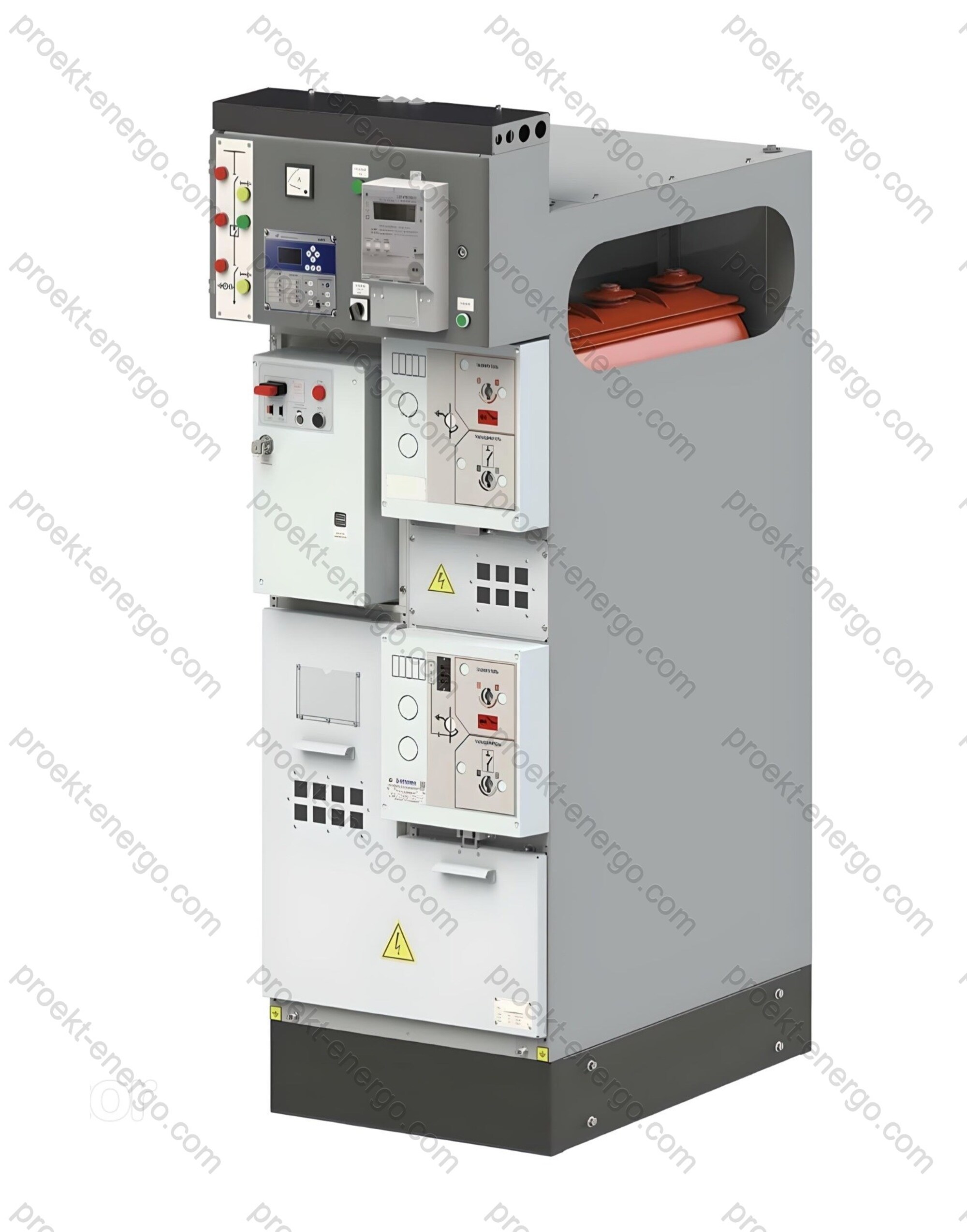
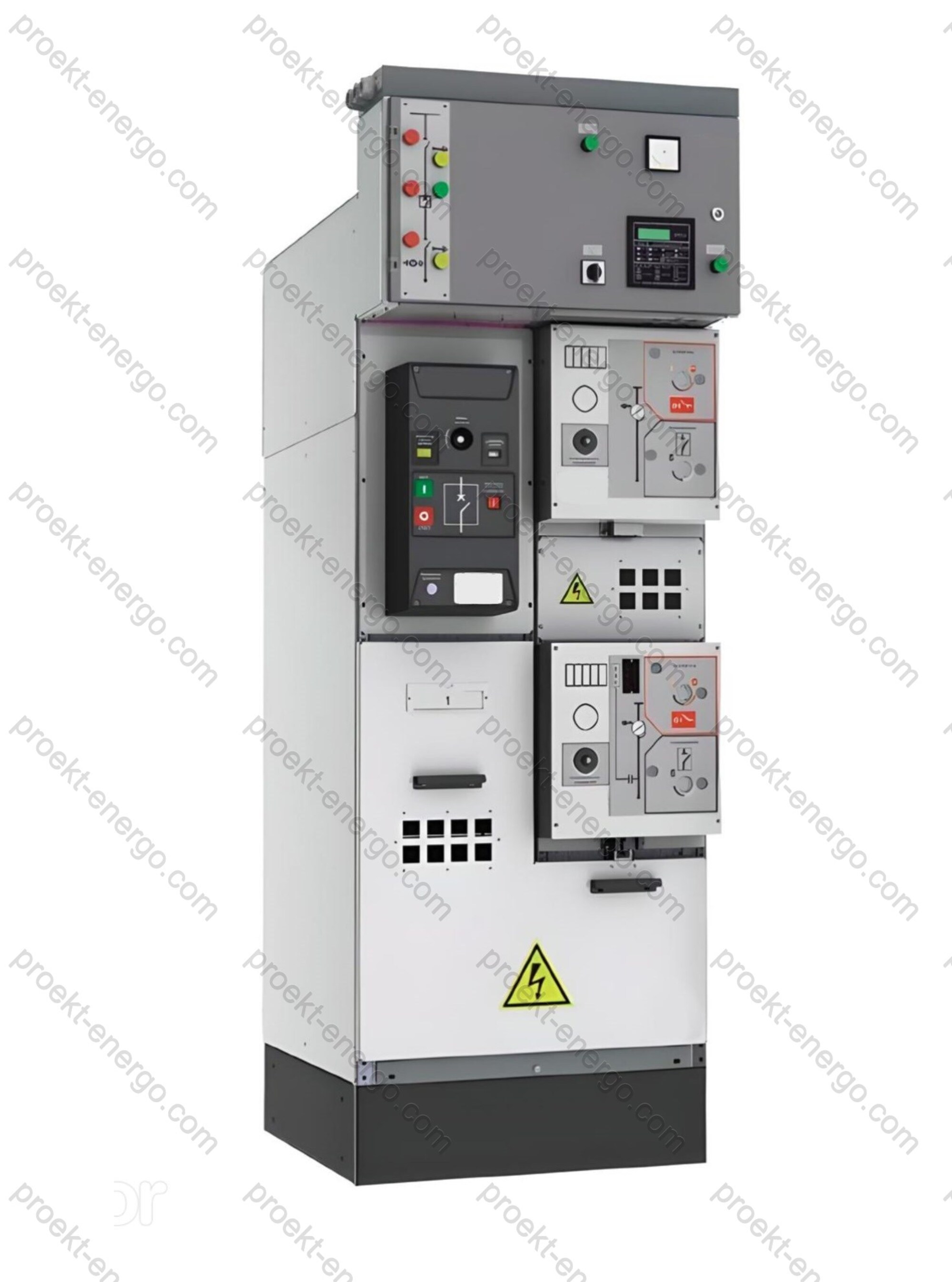
KSO-20 are modular single-front metal-enclosed switchgear panels 20 kV (AIS metal-enclosed) for receiving, distributing, and switching three-phase power at 50 Hz. Voltage series per IEC 60038: rated 20 kV with maximum operating 24 kV (Series I). The solutions target networks with isolated, resonant-earthed (compensated) or effectively earthed neutral at distribution and industrial power facilities: indoor MV substations (primary/secondary), auxiliary switchboards of power plants, and supply hubs for transport, logistics, and utilities. Supply options include installation in permanent buildings and integration into factory-built modular container stations.
Functionally, KSO-20 covers incoming and sectional panels with circuit breaker, feeder panels, transformer feeders, metering/measurement panels, reactive-power compensation, and ATS/AR (automatic transfer/reclose) sections. The single-front concept provides access to all controls and indications from the front, allowing rows along walls and efficient use of switchroom floor area. A unified busbar system and connection interfaces simplify scaling to reliability Categories I–III.
Service conditions
Base climatic category - U3 per GOST 15150; project-specific U1/U2/UHL, etc., are available considering temperature, humidity, altitude, and site corrosion category. Typical enclosure degree of protection - IP31 per GOST 14254 (IEC 60529). Where required, local IP of individual compartments can be increased while maintaining thermal regimes and ventilation.
The voltage class is certified to MV standards: Ur = 24 kV (maximum operating voltage for 20 kV equipment). Insulation levels, air clearances and creepage distances are project-validated for lightning/switching overvoltages and short-circuit forces, including thermal/dynamic withstand of main circuits.
Layout and design solutions
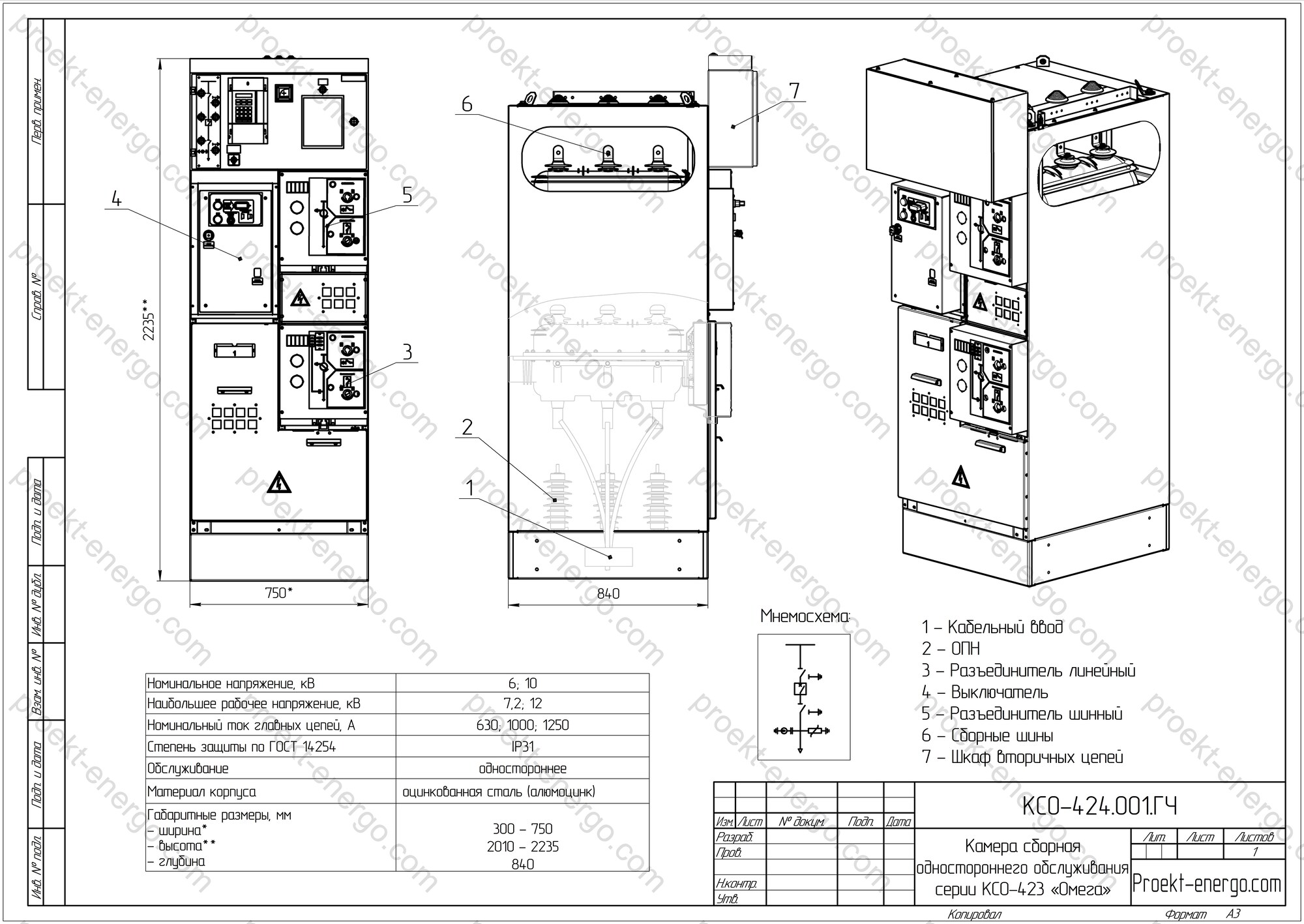
The series uses sectional separation into three isolated compartments: busbar, apparatus and cable. Segregation improves fault containment, simplifies maintenance, and mitigates consequences of abnormal events. For the 20 kV class, increased insulation distances and reinforced bus supports are provided. The busbar system consists of series-connected copper bar segments on insulating supports; provisions are made for bus barriers/bushing insulators for safe section coupling and “two-row” rooms with bus bridges.
The apparatus compartment is withdrawable (drawout): 24 kV vacuum circuit breaker, CTs/VTs; on request - fuse block or combined module. Operation is possible with the door closed; truck withdrawal is permitted only with the breaker open and after releasing the operational interlock. The cable compartment is primarily for bottom cable entry (top entry available); supports and clamps for armoured cables are provided, along with points for test plugs and sensors for lug temperature. The secondary compartment accommodates microprocessor IEDs for protection/automation, ATS/AR, metering, terminal blocks, and telecontrol; harness routing is organised in cable ducts with allowance for upgrades.
The enclosure is available in two manufacturing concepts: a welded steel frame with powder coating, or a weld-free body of hot-coated steel (Z/ZA/AZ/ZM) per EN 10346 with bolted/riveted joints. The latter offers high corrosion resistance and dimensional stability for series production; coating is selected per required service life and site corrosion category.
For control and monitoring, the front hosts a mimic diagram with LED indication of drives and circuits, internal compartment lighting, and an auxiliary socket for a portable lamp. On request, a VDIS voltage-presence indication system (IEC 62271-213) with LRM interface is implemented for portable voltage/phase comparators and integration into the interlock logic.
Safety and interlocking
Priority - process safety: all breaker operations with the door closed; no switching of disconnectors with the breaker closed; no earthing switch closing on live circuits; no truck withdrawal with the breaker closed; no access to HV compartments without applying earths. Inter-panel trapped-key interlocking is available for coordinated operations across multiple panels/sections. For personnel protection per IEC 62271-200, continuity category LSC (up to LSC2B), partition class PM/PI, and internal arc classification IAC (e.g., AFL/AFLR with appropriate equipment and type tests) are specified.
Versions and options
- Main switching device. 24 kV vacuum circuit breakers with interrupting ratings matched to calculated SC currents and protection settings (IEC 62271-100). Load break switches and contactors (IEC 62271-106) and “breaker-fuse” combinations (IEC 62271-105) are permissible - for transformer feeders and special duties.
- Disconnectors and earthing switches. Devices per IEC 62271-102 with required mechanical/dynamic withstand; sectional/bypass circuits for maintenance modes.
- Protection, automation and communications. Microprocessor IEDs for lines/transformers/sections, autoreclose/automatic transfer/load-shedding; integration via IEC 60870-5-104 and IEC 61850, PQ data export, support for local and supervisory SCADA.
- Measurement and metering. CTs/VTs per IEC 61869 series accuracy classes, revenue/technical meters, power-quality monitoring systems.
- Diagnostics and monitoring. Sensors for lug and bus temperatures, arc-flash sensors, breaker operation counters, partial-discharge monitoring - integrated into a predictive diagnostics system.
- Enclosure and environmental robustness. Two-coat powder paint or hot metallic coatings Z/ZA/AZ/ZM per EN 10346; seals and fire-rated penetrations per specification; seismic analysis/testing options per project category.
- Cable infrastructure. Cables per IEC 60502-2 (6–30 kV) with terminations/test kits; bus bridges and cable links between sections.
Typical configurations
Based on standard schemes, configurations include “incoming - section - feeders”, “two 20 kV incomers with ATS”, “incoming - transformer - feeder”, “incoming - section - section - feeders”, etc. For refurbishment of existing switchboards, transition panels and interface-dimension compatibility are provided. Project options include LSC up to LSC2B and PM/PI partitions, enabling isolation of individual feeders for maintenance without de-energising adjacent feeders within the selected category.
Partnering with contractors, OEMs and investors
We offer flexible cooperation models for localisation and serial manufacture of KSO-20: supply of metal kits (enclosures, doors, drawout trucks, busbar assemblies), licensing of design documentation, outsourcing of harnesses and mounting panels, support for type/qualification tests (including internal arc and functional safety), and staff training.
Documents
- Tender package: single-line diagrams, equipment lists, data sheets, compliance matrices, 3D visualisations, and a design note with effort estimate, delivery schedule, risk matrix, and mandatory test list.
- Manufacturing drawings and 3-D models: assembly drawings for enclosure/modules, specifications, main/secondary schematics, cable registers, purchased-parts lists, routing sheets. Formats - DWG/DXF, STEP/Parasolid; models - for AutoCAD, SolidWorks, Inventor.
- Interlocking schemes and safety: inter-panel and intra-panel logics, key interlocks, safe operation sequences, signal/condition tables, VDIS and arc-flash protection integration into the overall system.
- Commissioning and operation: insulation test programs, verification of secondary circuits, protection IED settings, pre-commissioning/commissioning reports, O&M schedules, torque charts, lists of control measurements and diagnostic tests.
- Module/parts cooperation: sourcing contractors for enclosures, busbar systems, wiring harnesses and mounting panels; agreement of tolerances, coatings and marking; organisation of incoming/in-process QC.
Standards compliance
Design, manufacture and testing of KSO-20 take into account (depending on configuration and selected devices): IEC 62271-200; IEC 62271-1; IEC 62271-100; IEC 62271-102; IEC 62271-105; IEC 62271-106; IEC 61869 series; IEC 60038; GOST 15150; GOST 14254 (IEC 60529); EN 10346; IEC 60502-2.
Technical data
| Rated voltage, kV | 20 |
| Maximum operating (Ur), kV | 24 |
| Rated current of main circuits, A | 630; 800; 1250; 1600 |
| Rated busbar current, A | 630; 1250; 1600 |
| Short-time withstand current (3 s), kA | 25; 31.5 |
| Peak withstand current (amplitude), kA | ≈63; ≈80 |
| Rated fuse current, A | up to 200 |
| Rated breaking capacity of 24 kV fuses (example 200 A), kA | up to 63 |
| Climatic category and installation class per GOST 15150 | U3 (others - project-specific) |
| Degree of protection per GOST 14254 (IEC 60529) | IP31 (higher locally - per spec) |
| Overall dimensions, mm - width - depth - height |
650–1000 1035–1250 ≈2300–2600 (selected versions up to ~3020) |
We will supply a complete set of engineering materials - from the tender package to shop-ready drawings and instructions for manufacture, assembly, and commissioning. Documentation is adapted to the project requirements, selected device OEMs, and your plant’s capabilities. If you do not plan in-house fabrication of modules/parts, we will organise cooperation for enclosures, drawout trucks, busbar systems, wiring harnesses, and mounting panels. Final assembly, electrical installation, and testing are performed at your site under our technical supervision.
- Preliminary technical documentation for tenders: single-line diagrams, equipment lists, questionnaires, standards compliance sheets, 3D models and renderings, and a design note with estimates of effort, schedule, and risks.
- Working drawings and 3-D models: assembly drawings, main and secondary schematics, bills of materials, purchased-parts lists, cable registers; formats - DWG, DXF, STEP, Parasolid; models - for AutoCAD, SolidWorks, Inventor.
- Interlocking schemes and algorithms: inter-panel/intra-panel logics, key interlocks, safe operation sequences, signal/condition tables, integration of VDIS and arc-flash protection into the overall system.
Why work with us
You do not need an expanded engineering staff: the drawing set enables a mid-level engineer to launch serial production without costly prototypes. We support the project end-to-end - from agreeing SC calculations and selecting apparatus to IEC/GOST to training assembly and operating staff in safe switching, interlocking, crimping techniques, and torque-tightening charts.
For more information on KSO-20 contact: inbox@proekt-energo.com
PDF - Download KSO-20 technical information