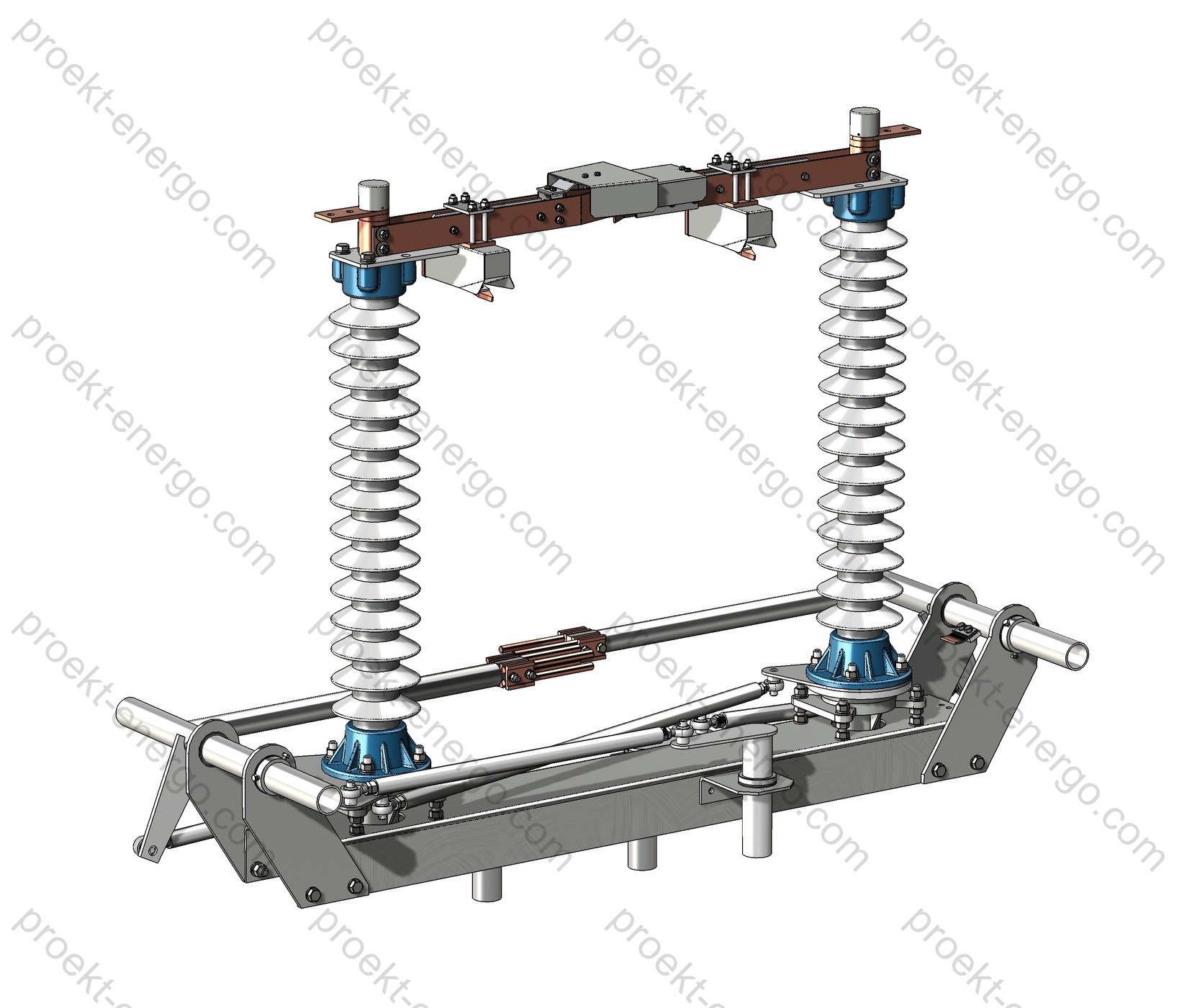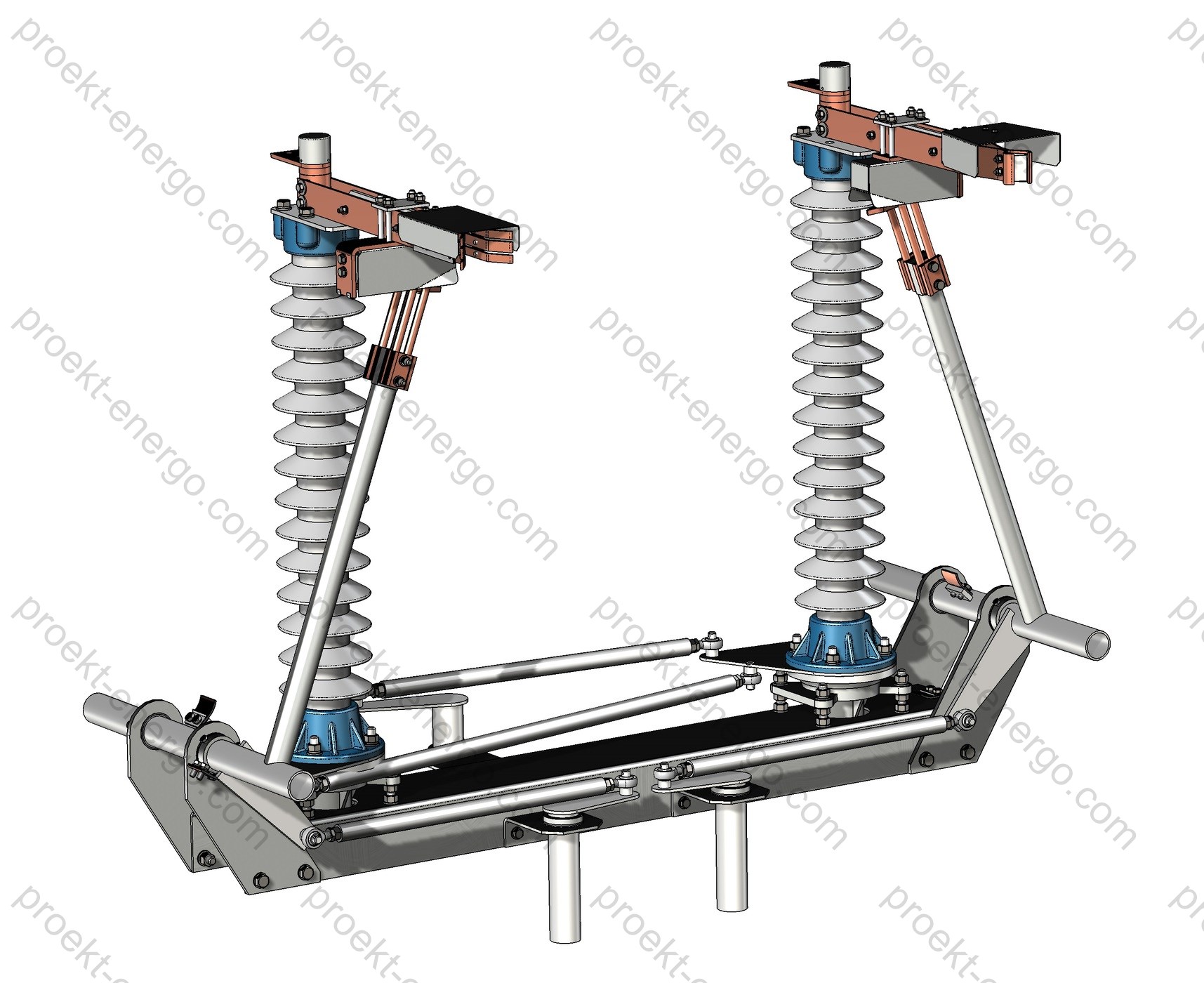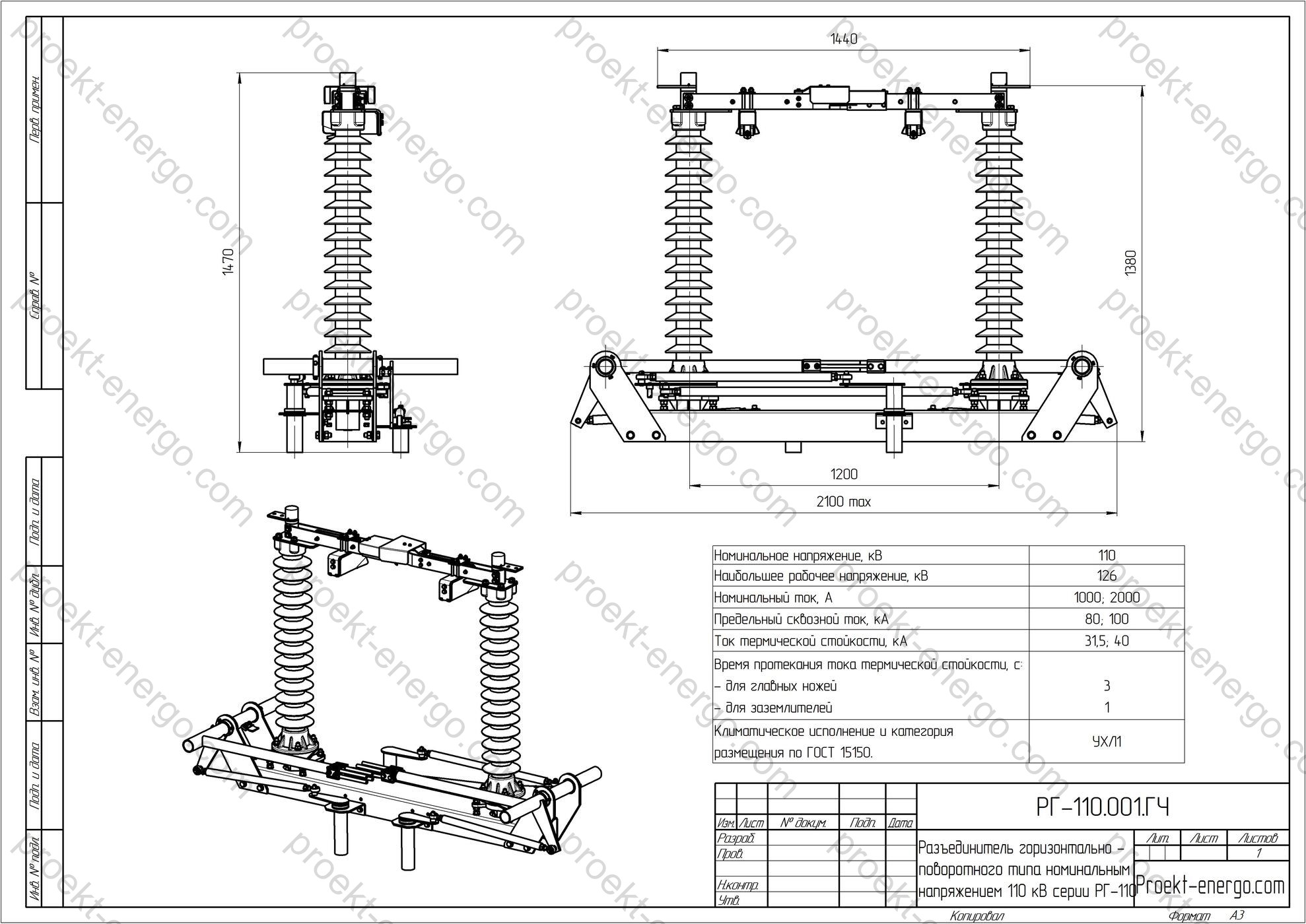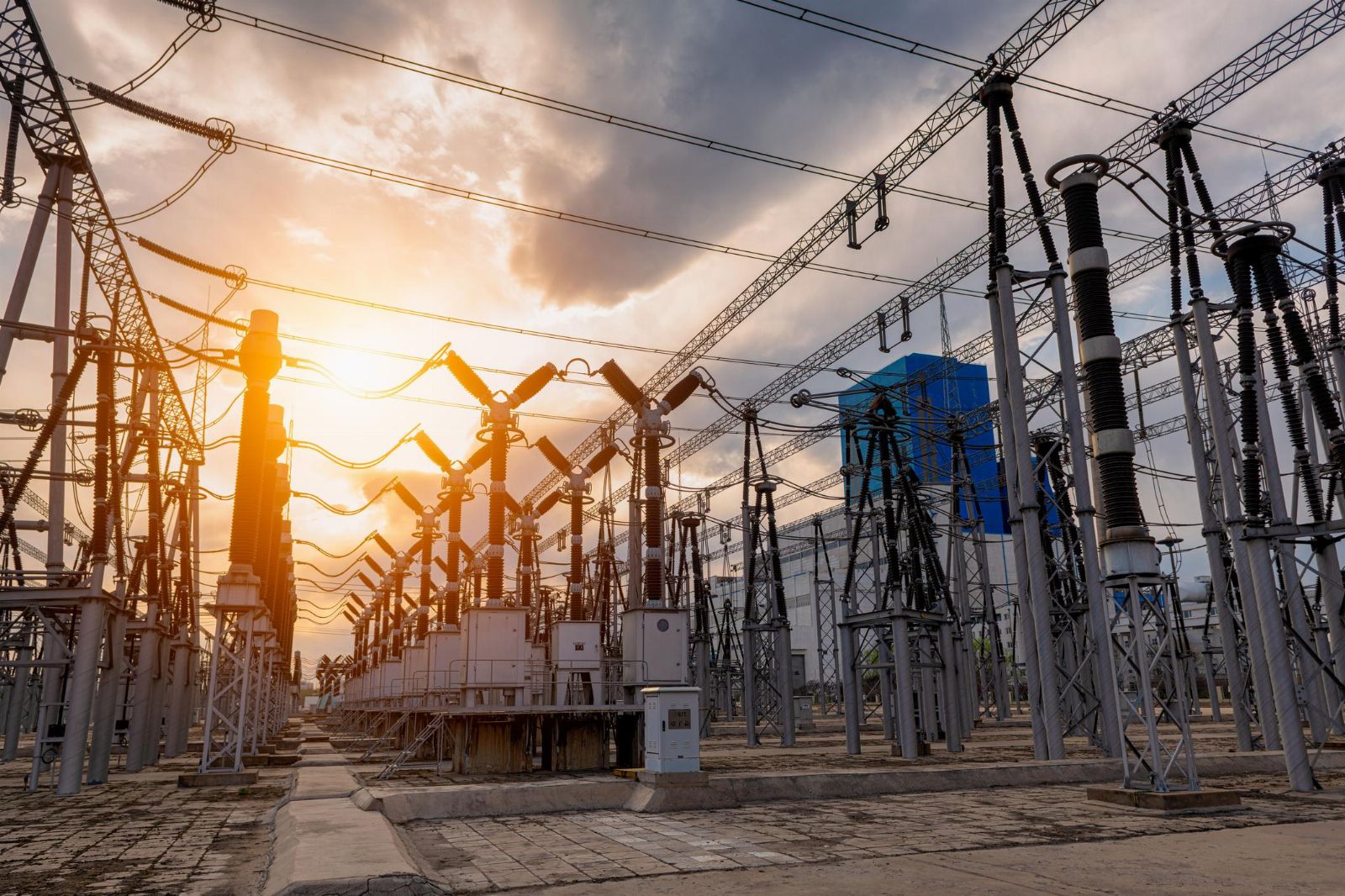
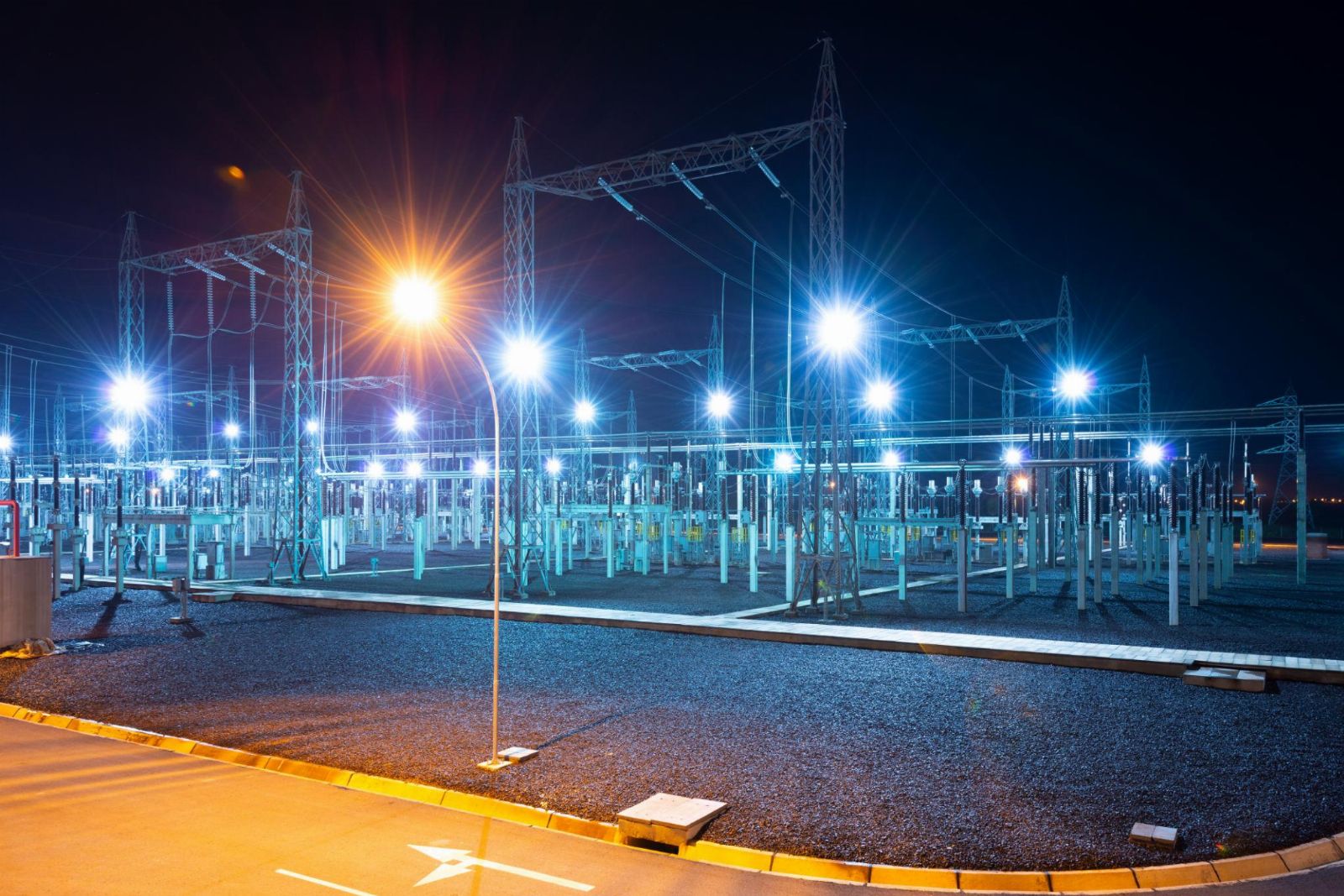
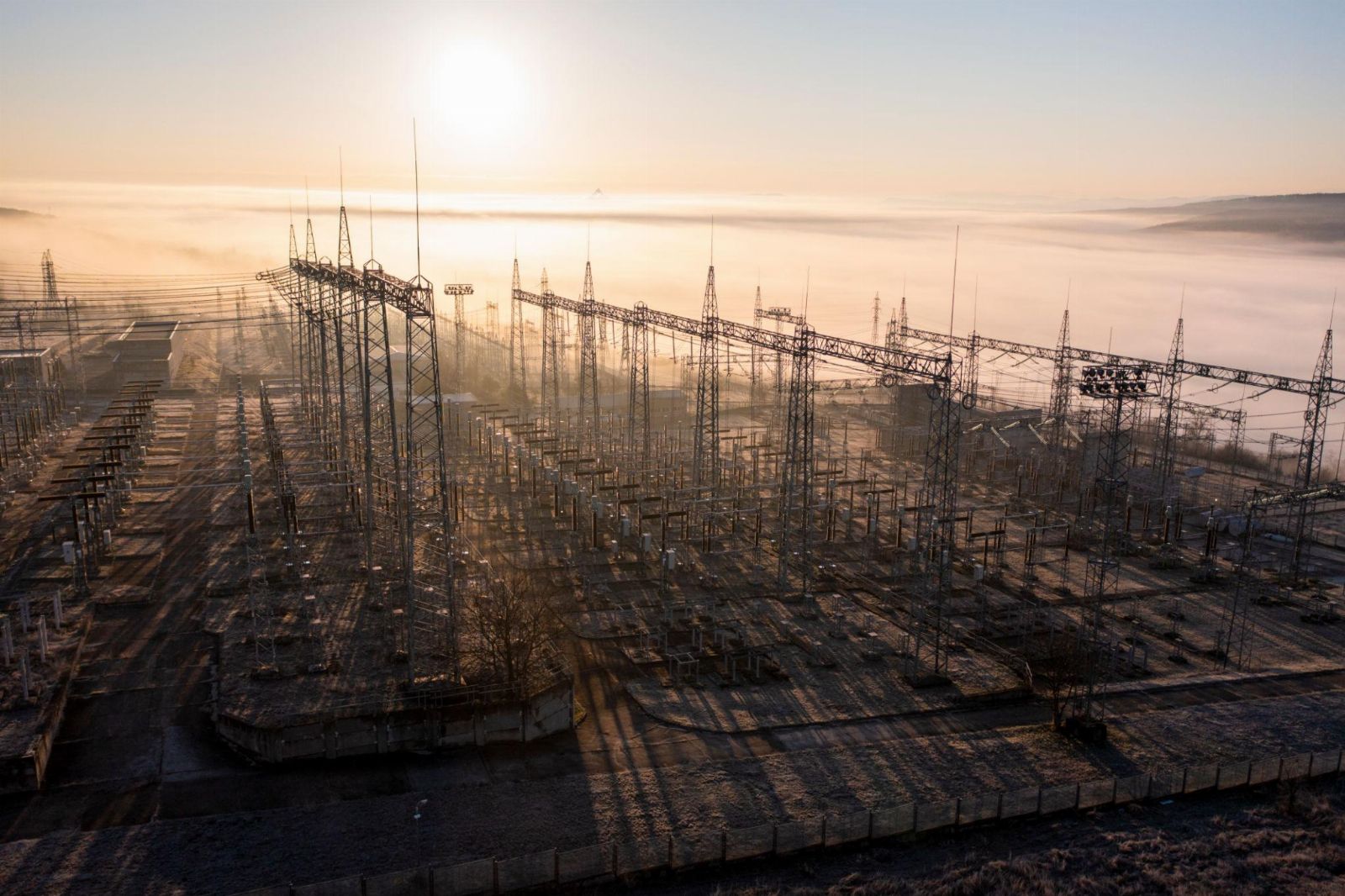
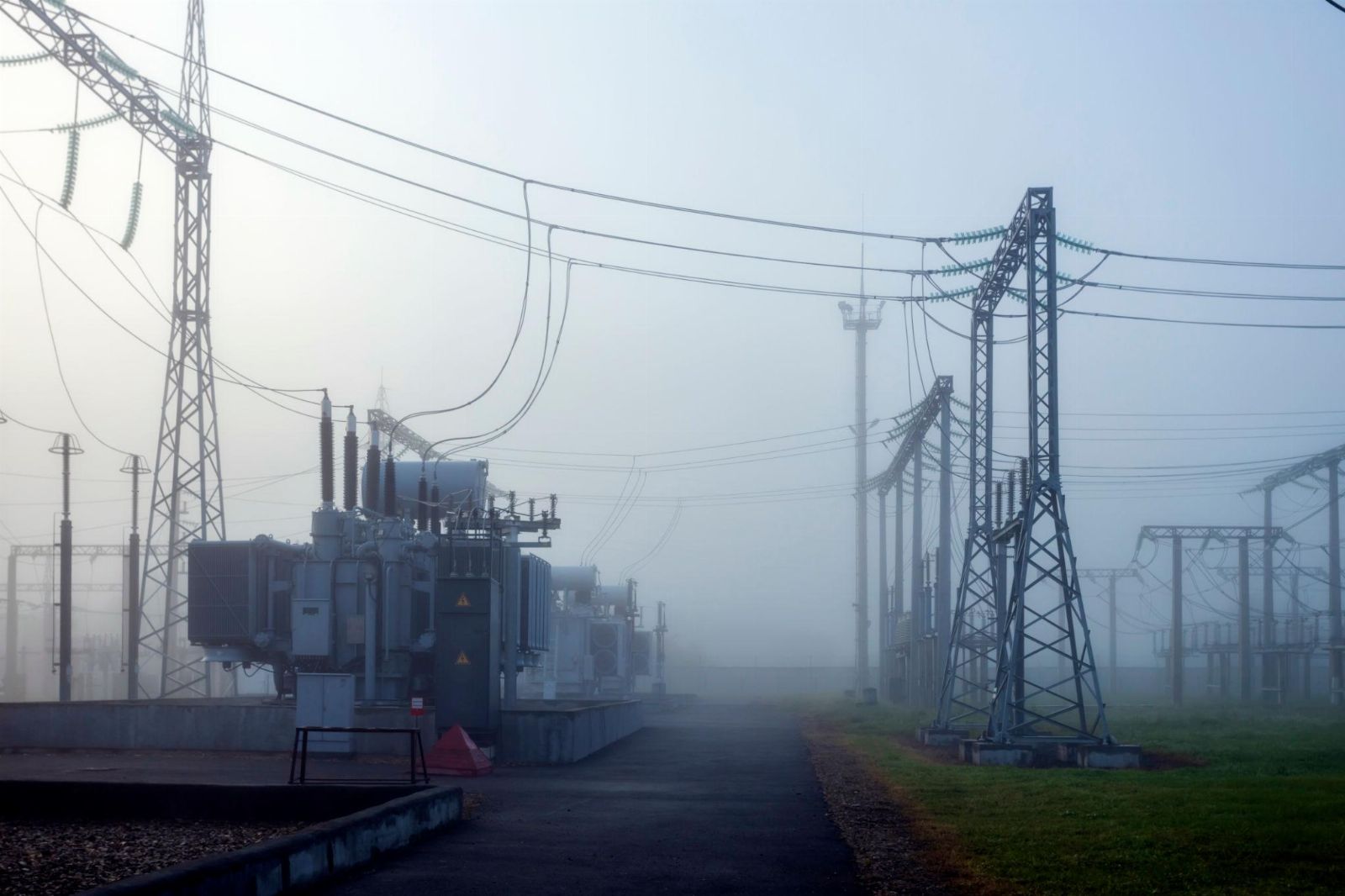
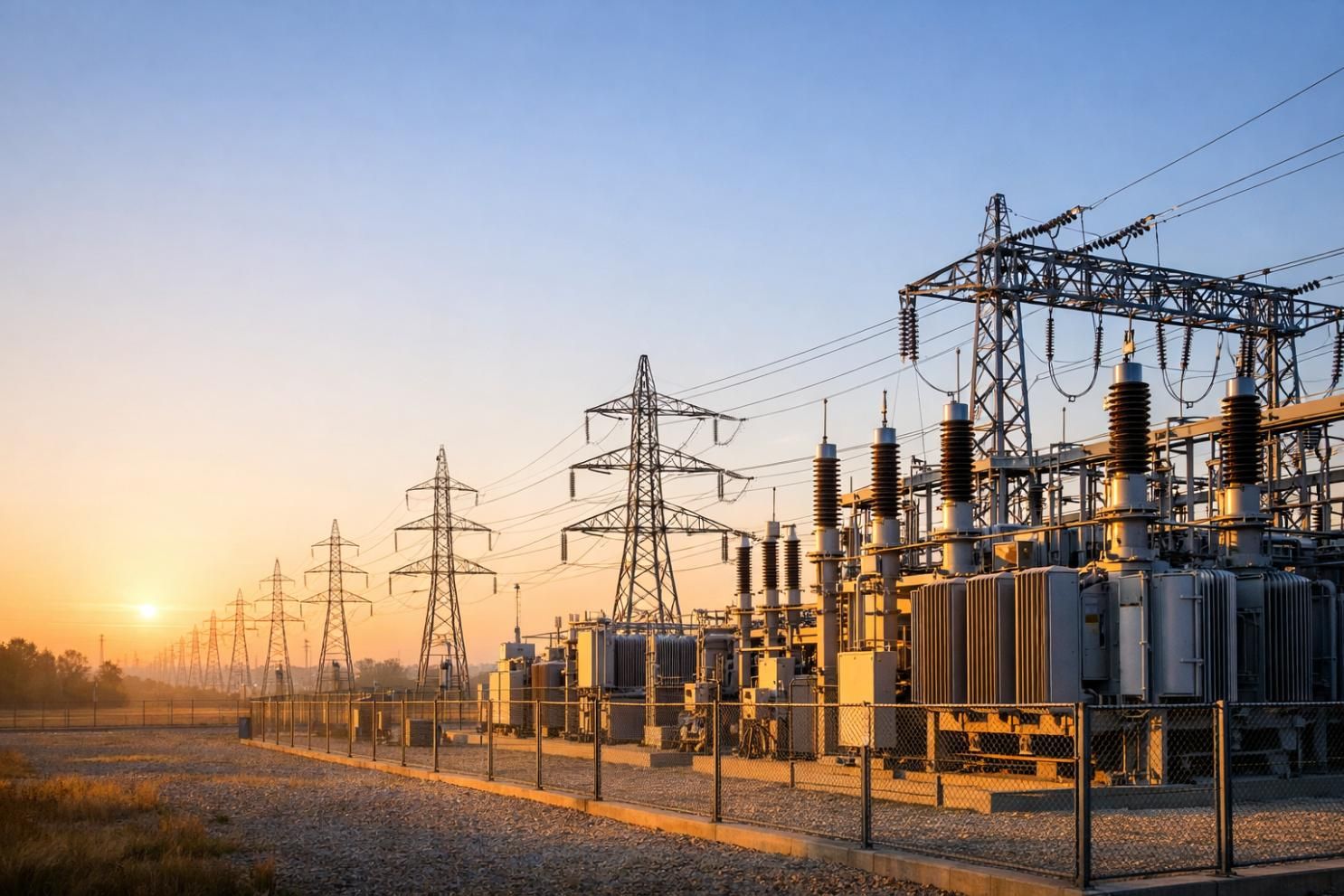
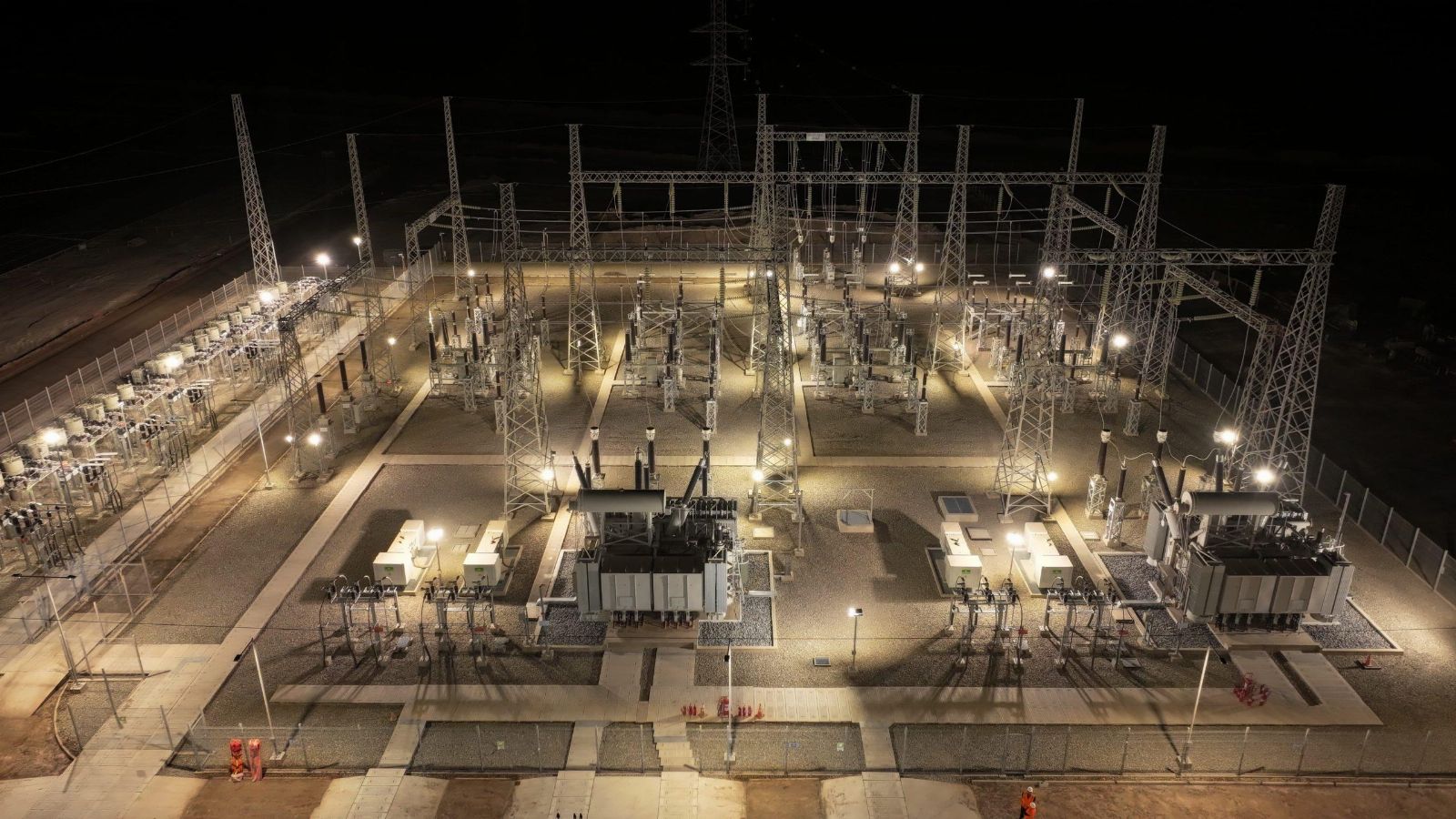
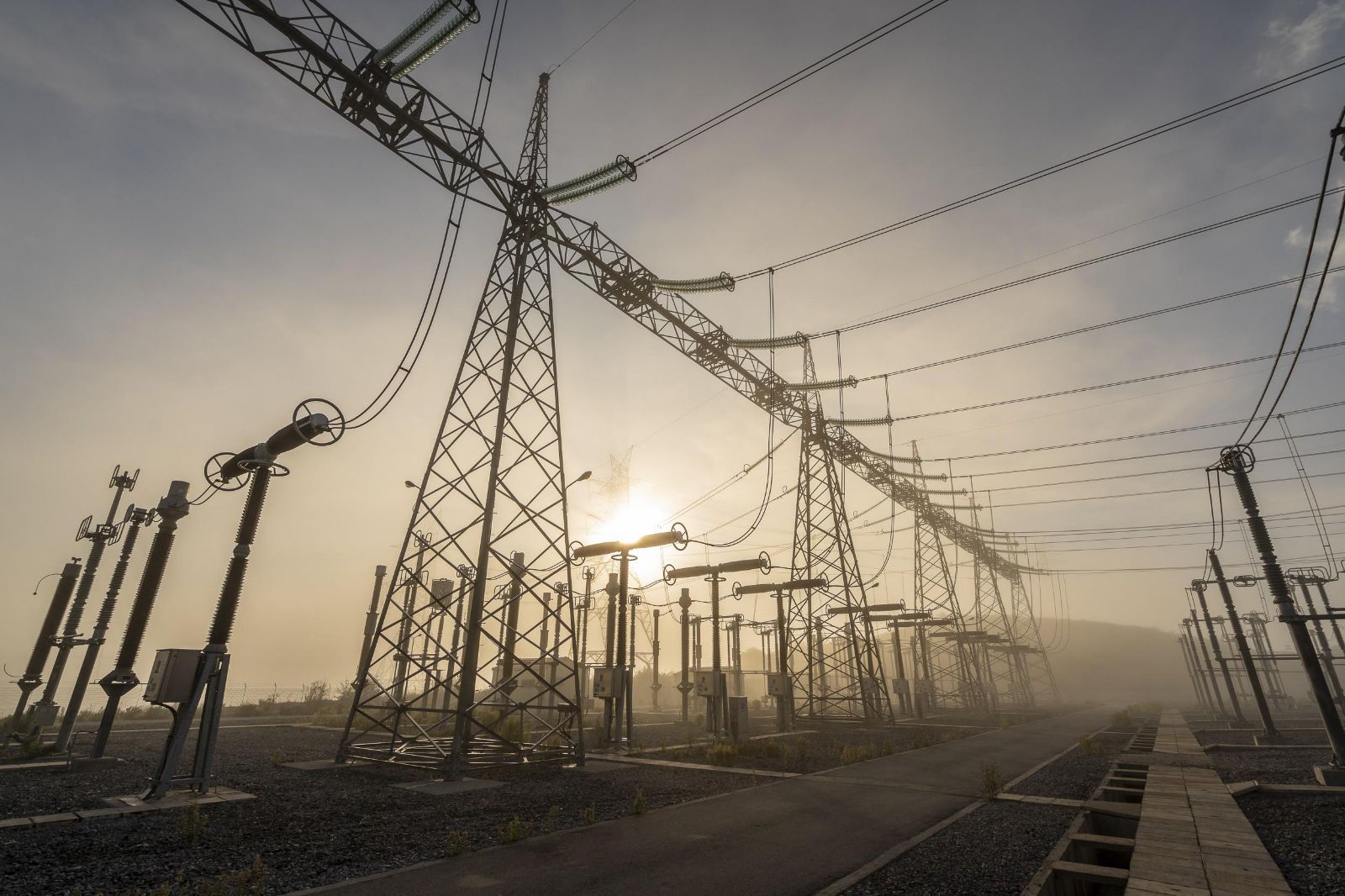
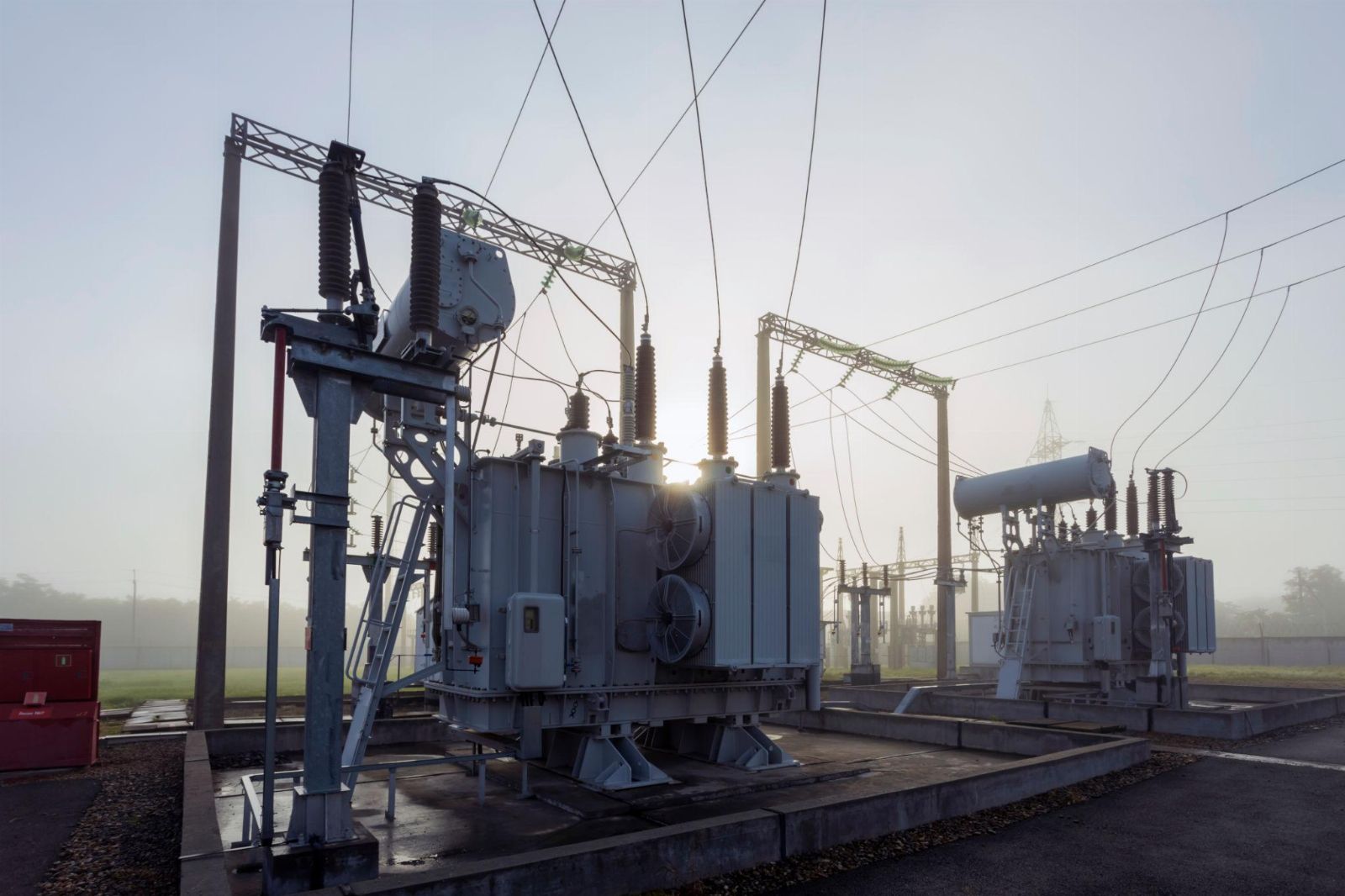
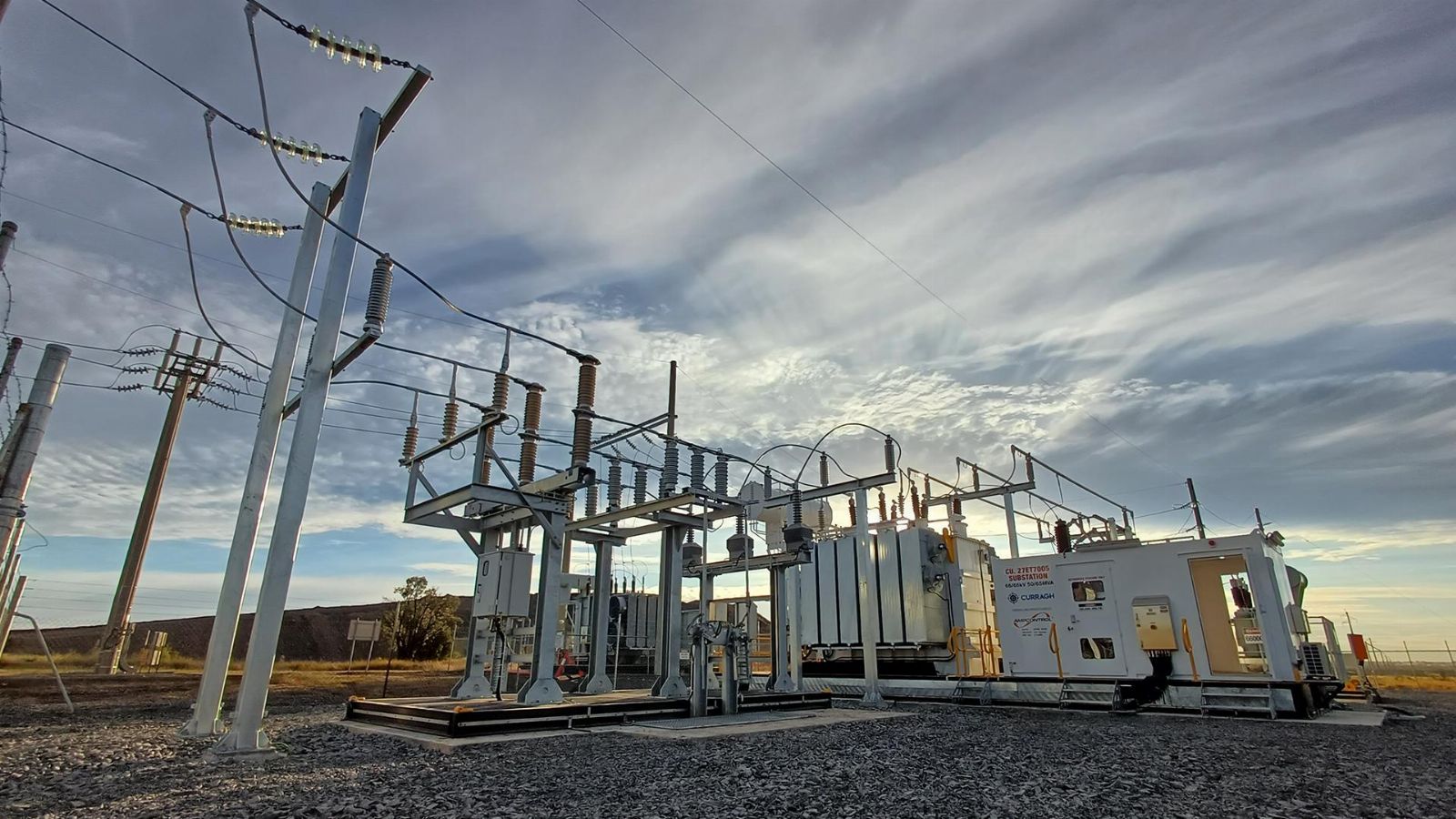
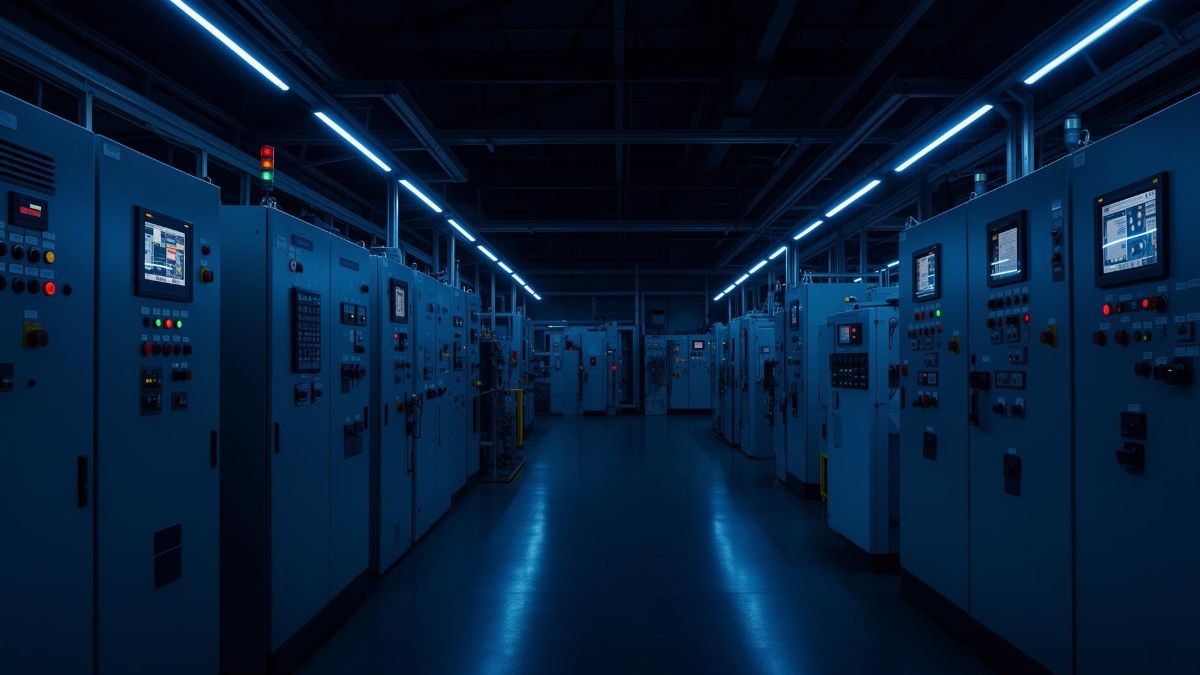
- We offer co-operation on replacement of old installed equipment on equipment at substations with new equipment produced at your factory. We have a large database of documentation for old, end-of-life equipment, and we will adapt your products to replace the old.

- Design of substation equipment in accordance with the technical specifications.

- Design documentation for the manufacture of electrical equipment.

- 3-D models, product drawings, BOM.

- Preparation of technical documentation for participation in tenders.

- Preparation of preliminary standards for material consumption for cost calculation..

- Consulting on projects.

..since August 1998

Proekt-Energo

Area of activity:

- Design of low-voltage, middle-voltage and high-voltage electrical equipment of substations for voltages of 0.4 - 220 kV.
- Development of working documentation in accordance with the technological capabilities of the plant.
- Preparation of preliminary technical documentation for participation in tenders for the supply of equipment.
- Consultations on project approvals.
- Supporting the production of equipment at the plant.

Specialization:

- Switchgear for indoor and outdoor installation for voltages of 6, 10, 20, 35 kV.
- Air-insulated secondary switchgears AIS for voltages 6, 10 kV.
- Complete transformer substations CTS for voltage 10 - 220 kV.
- Disconnectors for voltage 0.4 ... 220 kV.
- Drive to disconnectors.
- Replacement of withdrawable elements and switches in existing switchgear (Retrofit).
- Low-voltage switchgears for voltage 0.4 kV.
- DC 600V switchgears RU-600.

RDZ-220 Two-Post Disconnector, Rated Voltage 220 kV

RDZ-220 disconnectors are intended for isolating de-energized sections of an electrical circuit operated at up to 220 kV, as well as for earthing (grounding) the disconnected sections by means of earthing switches integrated with the disconnectors. The disconnectors are available in single-pole, two-pole and three-pole configurations. The pole connected to the operating mechanism is the driving one. Operating mechanisms are designed to actuate the disconnector. Rotation of the operating shafts of the main circuit and the earthing switch is performed manually using PRG-6 manual operating mechanisms and, optionally, by a PD-14 motor operator.
The disconnectors are manufactured for outdoor installation with environmental classification in accordance with EN/IEC 60721-3-4 (stationary use at non-weather-protected locations), with the following limits:
- installation altitude up to 1000 m;
- upper operating ambient temperature +40 °C;
- lower operating ambient temperature -60 °C;
- wind speed up to 40 m/s with no icing, and up to 15 m/s with icing up to 20 mm thick;
- average annual relative humidity 80% at +15 °C;
- maximum wind pressure 700 Pa (equivalent to 34 m/s) with no icing;
- maximum wind pressure 140 Pa (equivalent to 15 m/s) with an ice crust up to 20 mm thick.
Conductor tension in the horizontal plane, considering wind effects - not less than 1000 N.
Dielectric strength of the insulation meets the requirements applicable to 220 kV disconnectors (IEC 62271-1/-102). The creepage distance of external insulation for porcelain post insulators (per IEC 60815) is as follows:
- for pollution class I - not less than 405 cm;
- for pollution class II - not less than 505 (570) cm.
On request, RDZ-220 can be supplied on composite (polymer) insulators with creepage distance not less than 505 (570) cm.
Mechanical endurance of the disconnectors - 5000 operating cycles (close–open).

Technical data

Rated voltage, kV 220
Highest system voltage, kV 252
Rated current, A 1000; 2000; 3150
Peak withstand current (Ip), kA 100; 125
Short-time withstand current (Ith), kA 40; 50
Duration of short-time withstand current, s
- for main blades
- for earthing switches

3
1
Creepage distance of external insulation, cm, not less than 200
Conductor tension in the horizontal plane (incl. wind), N, not less than 800; 1000
Minimum insulation clearances from live parts to various elements, mm (in air):
- from live parts to earthed structures;
- between live parts of different phases;
- across the open contacts of a pole
 

- 1800
- 2000
- 1800

Application and use

RDZ-220 is applied in outdoor switchyards of 110–330 kV substations: at line and busbar entries and taps, inter-section and inter-bus couplers, bypass (maintenance) busbars, and upstream of power transformers, autotransformers, reactors, shunt and series capacitor banks, and instrument transformers. The disconnector performs three key functions: safe isolation without load, provision of a visible break (visible air gap) for personnel authorization, and earthing of the disconnected section by integrated earthing switches. This makes RDZ-220 a core device for operational switching, selective equipment isolation and safe working conditions for maintenance staff.

Thanks to its resistance to climatic influences, high electrodynamic and thermal withstand, and unified design, RDZ-220 is used in transmission-level substations, generator output yards, high-power industrial incomers and special energy-infrastructure facilities. The disconnectors are compatible with common switchyard schemes: single/double busbar systems, busbar systems with sectioning, with bypass busbars, “bridge” schemes, etc.

Service conditions

Baseline environmental classification - EN/IEC 60721-3-4 (outdoor, non-weather-protected). Operating ambient temperature range from -60 °C to +40 °C. Operation is permitted with ice accretion up to 20 mm and wind speeds up to 40 m/s (no icing) or up to 15 m/s (with icing). The specified average humidity and wind pressure correspond to the above classification. Installation altitude up to 1000 m without correction of clearances; versions for higher altitudes with adjusted insulation level and increased creepage distance are available on request.

In the standard configuration RDZ-220 is designed for temperate and cold climates, solar radiation, temperature swings and freeze–thaw cycles. On request, reinforced designs are available for higher wind areas, heavy pollution (increased creepage by insulator profile and/or composite insulators), and seismic regions (reinforced supports, additional bracing, latching). The required seismic category and wind/icing regioning are to be defined by the substation project.

Design and construction

The two-post disconnector consists of two post insulators per pole, carrying the fixed and moving contacts with current bars and a rotating blade. Isolation is achieved by rotating the contact assembly about its axis, creating a visible inter-contact gap that allows visual confirmation of the open state. The design ensures high rigidity and stable gap geometry under wind and icing loads, as well as low losses at rated current. Current is transferred from the moving part by flexible multi-strand copper shunts with anti-corrosion coating.

The contact system is designed for high wear resistance: high-conductivity copper contact parts with silver plating, spring-loaded contact packs to compensate thermal expansion, and self-tightening effects at short-circuit currents. Frames and supports are made of low-alloy steel with hot-dip galvanizing; bolted joints are zinc-plated with corrosion-protection compounds. Bearing assemblies are sealed and grease-packed for long life; the kinematics include cardan shafts, levers, links and couplings with adjustable angles and play. Corona rings and shields are provided where corona discharge is possible.

Each pole can be equipped with earthing switches (on one or both sides of the main break), enabling different isolation and earthing modes of the protected sections. Phase spacing and connection elevations are adapted to the project: top/bottom connection, terminal orientation as required, selection of blade rotation direction and operating mechanism side. Maximum interchangeability of assemblies within the series is provided to unify maintenance and spares.

Materials and coatings of main assemblies

Assembly Material / design Coating / features
Contact parts High-conductivity copper Silver plating, spring pressure
Flexible shunts Multi-strand copper braids Tin-zinc protective coating
Frames / supports Low-alloy steel Hot-dip galvanizing
Insulators Porcelain / composite on request Creepage per pollution level
Kinematics Steel / bronze, sealed bearings Long-life lubrication

Safety and interlocks

RDZ-220 is equipped with mechanical interlocks preventing operation of the earthing switch when the main disconnector is closed and vice versa. Provision is made for padlocks on handles and for key interlocks (key-sequence) to interface with switchyard doors and adjacent apparatus mechanisms. Positions “Closed / Open / Earthed” are indicated by mechanical position indicators on the mechanism and on each pole; for remote signals, limit switches (at least two per position) and/or inductive sensors are available. The design excludes inadvertent movements due to wind and vibration; the operating linkages use locking elements, double latches and adjustable stops.

With the PD-14 motor operator, electrical interlocking and inter-mechanism logic are implemented: closing inhibition under position mismatch, position self-diagnostics, local/remote control with local priority, and the ability to take the drive in/out of service. The motor-operator enclosure is metallic, outdoor-rated, gasketed, with anti-condensation heating and entries for power and signal cables. Safety nameplates and points for attaching portable earthing leads (per project) are provided for personnel protection.

Versions and options

The RDZ-220 series includes versions by rated current (1000; 2000; 3150 A) and short-circuit withstand (thermal 40/50 kA, peak 100/125 kA). Options include one or two earthing switches per pole, right/left mechanism location, blade rotation direction, top/bottom terminals, corona rings/shields, porcelain or composite insulators, increased creepage distance for polluted areas, reinforced supports for high wind/icing loads and seismic designs. Optional accessories - position sensors, operation counters, localized heating of assemblies, stainless fasteners, protective contact compounds for harsh environments, cable glands with sealing.

Standards compliance

Design and manufacture comply with applicable requirements for 220 kV disconnectors. International standards applied: IEC 62271-102 (Disconnectors and earthing switches), IEC 62271-1 (Common specifications), IEC 60815 (Selection and dimensioning of high-voltage insulators for polluted conditions), IEC 60168 (Tests on indoor and outdoor post insulators of ceramic material or glass). Environmental classification per EN/IEC 60721-3-4 (outdoor; non-weather-protected). On request, documentation can be aligned to project-specific sections of the IEC 62271 series.

Scope of supply and related equipment

Typical scope of supply: disconnector poles assembled, support structures, PRG-6 manual mechanism or PD-14 motor operator (on request), cardan and link drives, fastening kit, flexible shunts, product passport and operating manual, data sheet, installation drawing, spare-parts list. For motorized versions - a local control cabinet with terminals for power and signal cabling, a set of limit switches and auxiliary contacts. Related equipment - CTs/VTs (per project), surge arresters, busbars, connectors, flexible links, bus support insulators, transposition inserts.

Installation and maintenance requirements

Installation is performed in accordance with the substation design, observing phase-to-phase and phase-to-earth clearances, connection elevations and service zones. Supports are mounted on foundations ensuring the specified elevations and stability under wind/icing loads. Kinematic linkages are installed without skew, respecting the design angles and clearances, followed by adjustment and checking of all positions and interlocks. Maintenance includes periodic inspection of contact surfaces, tightening of bolted joints, checking flexibility of shunts and condition of protective coatings, bearing lubrication (if specified), and verification of limit switches and indication.

Co-operation with contractors, equipment manufacturers and investors

We offer comprehensive cooperation to organize manufacturing of RDZ-220 disconnectors at your production site. The model includes transfer of the design-documentation package, process route and norms, selection of reliable suppliers (insulators, forgings/castings, flexible shunts, drive enclosures, galvanized steelwork), start-up support, production readiness audit and staff training. Critical assemblies (contact systems, cardan drives, earthing-switch kits) can be supplied by us to accelerate product mastering and mitigate risks in key components.

For investors, a staged entry model is available: from one-off batches for specific projects to stable serial production with localized procurement and service. During preparation, we jointly define equipment, tooling and instruments, identify bottlenecks, and develop method statements and an implementation schedule. For installation contractors, service contracts are available for supervision, commissioning, warranty support and rapid restoration under emergency conditions.

Documentation offered (drawings, 3D models, AutoCAD, SolidWorks, DXF, DWG, Parasolid)

We prepare a complete set of design and O&M materials sufficient for independent manufacture and production set-up. The package includes: BOMs and purchase lists, assembly and part drawings, kinematic and interlocking schemes, external connection diagrams, cable and wire lists, installation drawings and general arrangements. 3D models are provided in SolidWorks and neutral exchange formats STEP/Parasolid; 2D drawings in DWG/DXF for AutoCAD. Additionally, we provide a “zero” tender set (descriptions, questionnaires, compliance matrices), test programs and procedures, transport and storage instructions, O&M regulations, typical lubrication and fastening charts, as well as passport and data-sheet templates.

Why work with us

- Faster time-to-production: documentation tailored to your shop capabilities, avoiding redundant operations and rework.
- Lower cost: optimized list of purchased assemblies and alternative suppliers for critical items.
- Operational reliability: proven design solutions for harsh climates, enhanced contact system and reinforced kinematics.
- Full engineering support: from supervision and adjustment to failure analysis based on field experience.

For additional information on RDZ-220 disconnectors please contact: inbox@proekt-energo.com

PDF – Download technical information on RDZ-220 disconnectors

pdf

RDZ-150 Two-Column Disconnector, rated voltage 150 kV

RDZ-150 type disconnectors are intended for establishing and breaking de-energized sections of an electrical circuit energized up to 150 kV, as well as for earthing (grounding) the isolated sections by means of earthing switches integral to the disconnectors. The disconnectors are available in single-pole, two-pole and three-pole versions. The pole to which the operating mechanism is connected is the driving pole. Operating mechanisms are designed to operate the disconnectors. Rotation of the drive shafts of the main circuit and the earthing switch is performed manually (PRG-6 operating mechanism) or by motor drive (PD-14).
The disconnectors are manufactured for outdoor installation in environmental conditions compliant with EN/IEC 60721-3-4 (outdoor), formerly UHL1, with the following limits:
- altitude not exceeding 1000 m a.s.l.;
- upper service ambient temperature +40 °C;
- lower service ambient temperature -60 °C; 
- wind speed up to 40 m/s with no ice, and up to 15 m/s with rime ice thickness up to 20 mm;
- annual mean relative humidity 80% at +15 °C;
- maximum wind pressure 700 Pa (equivalent to 34 m/s) with no ice;
- maximum wind pressure 140 Pa (equivalent to 15 m/s) with ice crust up to 20 mm on surfaces.
Horizontal conductor tension including wind effect - not less than 1000 N.
Dielectric strength of insulation meets the requirements for 150 kV class disconnectors in accordance with IEC 62271-1 and IEC 62271-102. The creepage distance of external insulation for standard porcelain post insulators per IEC 60273/IEC 60815 is as follows:
- for pollution class I - not less than 270 cm;
- for pollution class II - not less than 340 (390) cm.
On request, RDZ units can be supplied on composite (polymer) insulators with creepage distance not less than 340 (390) cm.
Mechanical endurance of the disconnectors - 5000 operating cycles (close-open).

Technical data

Rated voltage, kV 150
Highest system voltage, kV 170
Rated current, A 1000; 2000
Rated peak withstand current (dynamic), kA 100
Rated short-time withstand current, kA 40
Rated duration of short-time current, s
- for main blades
- for earthing switches

3
1
Minimum creepage distance of external insulation, cm 200
Horizontal conductor tension incl. wind, N, not less 800; 1000
Minimum clearances in air from live parts to various elements, mm:
- to earthed structures;
- between live parts of different phases;
- across the open contacts of one pole
 

- 1300
- 1400
- 1300

Purpose and application

RDZ-150 is a two-column, outdoor, center-break disconnector intended to provide a visible isolating gap in circuits of the 110–150 kV class when no load current is present. The device enables safe maintenance and operational switching in medium-voltage substations, provides solid earthing of isolated sections when equipped with a fixed earthing switch, and serves as a layout element in air-insulated switchgear (AIS) yards at 110/150 kV.

Typical applications: bay positions in AIS 110/150 kV (gantry and portal layouts); line terminations for 110–150 kV overhead lines on end and through portals; bus sectioning, bypass and maintenance jumpers; isolating of transformers, autotransformers and reactors on the HV side with no load; temporary isolation and earthing of connections to switching and measuring equipment (CTs, VTs, surge arresters) during service. The design is intended for outdoor service per EN/IEC 60721-3-4 with direct exposure to solar radiation, wind and ice loads.

For utilities operating transmission and distribution substations, RDZ-150 is a baseline no-load switching device complementing circuit breakers (oil, SF6, vacuum) and providing scheme flexibility: visible isolation, safe earthing and operational separation of equipment. In retrofit projects, RDZ-150 helps standardize portal layouts, reduce spare-parts variety and achieve the required clearances for the 150 kV level without rebuilding foundations.

Service conditions

The disconnector is designed for year-round outdoor service. The operating temperature range corresponds to EN/IEC 60721-3-4; adaptation is available for areas with increased salt and industrial pollution (coastal zones, cement/chemical/metallurgical plants) by increasing total creepage distance and/or applying composite hydrophobic insulation. For altitudes above 1000 m a.s.l., insulation distances may be corrected by design. Structural elements are rated for wind and ice loads typical for these environmental categories, as well as for moderate seismic influences as specified by the substation project.

Pollution environment: classes I–II in the standard version on porcelain post insulators; for class III (heavy pollution) and for strong saline fog areas, a version on composite insulators with increased creepage distance and optimized shed profile is recommended. In dusty or salty conditions, periodic inspection and, when required, washing of insulators should be performed per preventive maintenance procedures. Foundations are arranged to provide drainage and runoff of storm water.

Layout and design features

RDZ-150 is a center-break, two-column device: the conducting blade, when closed, bridges the two insulator columns to form a continuous current path. Each column is a support/bearing insulator on a galvanized steel frame. Rotating joints use sealed bearings with anti-corrosion protection; hinges are protected from dust and moisture. Current-carrying parts are made of copper/aluminum sections with silver- or tin-plated contact surfaces to ensure low contact resistance and high thermal withstand under short-circuit currents.

The contact system is a sliding-pressure type with spring loading that self-compensates thermal and vibration effects. Corona rings and grading elements (by design) are provided to reduce local electric-field stress in the 110–150 kV range. Connection points to conductors/busbars are universal: flexible shunts, drilled pads to suit site hole patterns, and standard cable lugs may be fitted. The configurable layout allows poles to be oriented along or across the portal, accounting for actual interphase distances and clearances to earthed structures.

An earthing switch (if provided) is mounted on one side of the pole and mechanically interlocked with the main blade. The linkage uses adjustable rods to synchronize phases (for three-pole versions) and achieve the required rotation angles. Position indication “Closed/Open/Earthed” is provided at the operating mechanism; auxiliary microswitches may be installed for remote indication in protection & control / SCADA schemes.

Load-bearing frames and aluminum/steel parts are hot-dip galvanized and/or powder-coated for long-term corrosion protection. Baseframe stiffness provides torsional stability against wind forces acting on the conductor and blade as specified in “Service conditions”. Standardized base bolt patterns simplify adaptation to existing AIS 110/150 kV portal foundations. Interphase tie-rods and operating shafts are supplied to synchronize three poles with one mechanism (for three-pole execution) or to allow independent mechanisms per pole as required.

Key assemblies Function and features
Rotating insulator columns Provide rotation of the contact blade; sealed bearing supports; corrosion protection.
Contact blade and jaws Silver/tin-plated surfaces; spring pressure; low contact resistance.
Earthing switch Mechanical interlock with main blade; ensures safe earthing of the isolated section.
PRG-6 / PD-14 drive Manual or motorized operation; provision for limit switches and remote signalling.
Corona rings (by design) Reduce local field stress and corona losses at 110–150 kV.

Safety and interlocks

Personnel safety is ensured by design and procedural measures. Interlocks prevent closing the earthing switch when main contacts are closed, and prevent closing the main blade when the earthing switch is closed. Mechanical position indicators and latching devices suitable for lock-out/tag-out (LOTO) can be mounted on the drive. On request, key interlocks between devices (e.g. with a circuit breaker or adjacent disconnectors) are implemented, as well as electrical interlocks via drive auxiliary contacts.

The design provides sufficient rigidity of the contact system and resistance to electrodynamic forces under short-circuit conditions for the 150 kV level; the blade is secured against rebound during operation. Guards on rotating drive parts and travel stops ensure injury prevention.

Versions and options

RDZ-150 is supplied in several configurations to suit specific layout and service conditions. Available as single-, two- and three-pole sets; with or without earthing switch; on porcelain or composite insulators; with manual or motor drive; with outdoor control cabinets for integration into SCADA/automation systems. Options include choice of interphase spacing, blade rotation relative to the portal direction, terminal pad orientation, and use of flexible shunts/bus transitions.

Version Description Typical application
Single-pole One pole with operating mechanism; three units can be synchronized by interphase tie-rod. Retrofits on existing foundations; non-standard portals.
Three-pole synchronized Three poles with a common drive, interphase rods and shafting. Bus sectioning, line and power transformer bays.
With earthing switch Earthing blade on one side with mechanical interlock. Maintenance with visible earthing of the isolated section.
Porcelain / Composite Choice of insulation and creepage distance for pollution classes I–III. Standard / polluted areas, coastal zones, industrial sites.
PRG-6 / PD-14 drive Manual or motorized; with limit switches and remote indication. Operational switching, SCADA integration, remote control.

Standards compliance

RDZ-150 disconnectors are designed and manufactured in line with internationally recognized standards for medium-voltage switchgear. Key references include: IEC 62271-1 (common specifications), IEC 62271-102 (AC disconnectors and earthing switches), IEC 60815 (selection of insulators for polluted conditions), IEC 60273 (characteristics of post insulators for outdoor/indoor service), and EN/IEC 60721-3-4 (environmental conditions - outdoor). National equivalents and corporate specifications can be applied on request.

Engaging contractors, manufacturers and investors

We invite cooperation with design and construction firms, electrical equipment manufacturers and potential investors interested in localizing production of disconnectors for the 110–150 kV range. We provide a manufacturing documentation package tailored to the partner’s capabilities, support series launch, offer technology assistance for parts fabrication and assembly, and train personnel. Subject to separate agreement we can supply assemblies (contact system, insulators, drives, tie-rod and shaft systems) and provide author’s supervision at the customer’s site during installation and commissioning.

Documentation offered (drawings, 3D models, CAD)

Upon request we provide: general assembly drawings, bills of materials, detail and welded-assembly drawings, kinematic and interlock schemes, manuals and operation instructions. Available formats: AutoCAD (DWG/DXF), SolidWorks (SLDPRT/SLDASM), Parasolid (X_T/X_B), STEP/IGES, PDF. To accelerate project integration, we supply 3D models of a pole, drive and interphase rods to check clashes in the customer’s BIM/CAE environment. On request we perform supervisory installation, author’s support and supply of spare parts kits.

Engaging contractors and manufacturers

We seek partners for serial manufacture, installation and service of disconnectors in the 110–150 kV range. We provide process charts, equipment and tooling lists, quality control plans, preventive and commissioning procedures. We adapt documentation to the machine park and standards of your enterprise, assist with cooperation on key assemblies (contact system, insulators, drives), and support implementation and staff training. Options for deep localization and product-line expansion (future 220–330 kV levels) are available for investors.

Why work with us

- No need to maintain a large team of highly qualified engineering staff - you receive a complete documentation set that can be used by a mid-level engineer. 
- No need to build pilot prototypes - our experience allows us to launch serial production successfully.
- Working to our documentation - your specialists will receive guidance on all aspects of manufacturing the RDZ-150 disconnectors.

For additional information on RDZ-150 disconnectors, please contact: inbox@proekt-energo.com

PDF - Download technical information for RDZ-150 disconnectors

pdf

RDZ-110 Two-column centre-break disconnector, rated voltage 110 kV

RDZ-110 disconnectors are intended for isolating and re-connecting de-energised sections of an electrical circuit operating at up to 110 kV, as well as for earthing (grounding) those de-energised sections by means of earthing switches integrated with the disconnectors. Versions are available as single-pole, two-pole and three-pole. The pole coupled to the operating mechanism is the driving pole. Operating mechanisms are intended for disconnector operation. Rotation of the main-circuit and earthing-switch shafts is performed manually with PRG-6 mechanisms or by a PD-14 motor drive.
The disconnectors are manufactured for outdoor service in a cold/moderate climate (installation category 1) in accordance with EN/IEC 60721-3-4, with the following limits:
– altitude up to 1000 m;
– upper service temperature of ambient air +40 °C;
– lower service temperature of ambient air -60 °C;
– wind speed not more than 40 m/s with no ice and not more than 15 m/s with ice accretion up to 20 mm;
– average annual relative humidity 80% at +15 °C;
– maximum wind pressure 700 Pa (corresponds to 34 m/s) without ice;
– maximum wind pressure 140 Pa (corresponds to 15 m/s) with ice accretion up to 20 mm.
Conductor tension in the horizontal plane including wind effects - not less than 1000 N.
Dielectric withstand performance complies with the requirements for the 110 kV class in IEC 62271-1 and IEC 62271-102. Creepage distance of the external insulation for standard porcelain insulators per IEC 60815:
– for pollution level I - not less than 200 cm;
– for pollution level II - not less than 250 (280) cm.
On request, RDZ units may be supplied on polymeric insulators with creepage not less than 250 (280) cm.
Mechanical endurance of the disconnectors - 5000 operating cycles (open/close).

Technical data

Rated voltage, kV 110
Maximum system voltage, kV 126
Rated current, A 1000; 2000; 3150
Rated short-time peak withstand current (electrodynamic), kA 80; 100; 125
Rated short-time withstand current (thermal), kA 31.5; 40; 50
Duration of short-time withstand current, s
– main blades
– earthing switches

3
1
Creepage distance of external insulation, cm, not less than 200
Conductor tension in the horizontal plane incl. wind, N, not less than 800; 1000
Minimum clearances in air from live parts to various elements, mm:
– from live parts to earthed structures;
– between live parts of different phases;
– across the open contacts of one pole
 

– 900
– 1000
– 900

Application and use

RDZ-110 is a two-column, outdoor centre-break disconnector with rotating post insulators and a central isolating gap. It provides a visible isolating distance and electrical isolation of the disconnected network section, enabling safe maintenance in 110 kV switchyards. Typical applications:

  • 110 kV AIS outdoor switchyards of utilities and industrial plants;
  • Switching of transformer connections, overhead and cable lines, bus bridges and bus sections;
  • Switching of transformer no-load currents and line charging currents (within permissible limits), plus earthing of disconnected sections by built-in earthing switches;
  • Use in automatic bus transfer schemes, bypasses and maintenance jumpers;
  • Equipping new and modernised substations with unified drives, interphase shafts and standardised connection interfaces.

Thanks to its modular design, RDZ-110 adapts to the switchyard layout: installation on foundations or steel structures, on line portals or bus galleries. Recommended wherever frequent off-load operational switching, high mechanical reliability and clear indication of contact position are required.

Service conditions

The standard configuration is designed for outdoor service per EN/IEC 60721-3-4 (installation category 1). The design accounts for the wind and icing loads stated above as well as long-term exposure to solar radiation, rain and dust. Mechanism parts are made of corrosion-resistant steels and aluminium alloys with protective coatings; bearing pairs are sealed, which increases service life and reduces maintenance. On request, versions are available:

  • for areas with higher pollution severity (increased creepage distance, hydrophobic coatings);
  • with polymeric insulators (silicone rubber) for improved performance under wet and polluted conditions;
  • for extended temperature ranges and special climatic factors (low-temperature lubricants, anti-icing solutions in drives);
  • for zones with higher wind loads and specific corrosion-protection requirements.

Arrangement and design features

RDZ-110 belongs to the class of two-column centre-break disconnectors. Each phase (pole) has two support post insulators mounted on a common base frame. The rotation axis is at the base; during opening/closing the posts rotate synchronously in the horizontal plane from the driving mechanism via linkages and an interphase shaft. Main assemblies:

  • Base frame. Rigid welded structure with anti-corrosion coating. Prepared pads and holes for the drive, interphase shaft and earthing switches; alignment devices provided for on-site adjustment.
  • Support insulators. Porcelain (standard) or polymeric (option) with normalised creepage distance for the selected pollution level. The current-carrying blade is mounted on the top of the post.
  • Current path. Pivoting blade with multi-lam contact fingers and spring-loaded pressure system ensuring stable contact force and low resistance. Connections to the fixed contacts by flexible connectors/straps to accommodate thermal and mechanical movement.
  • Earthing switch(es). Installed on the fixed or moving side, with its own shaft and interlocks preventing mal-operation.
  • Operating mechanism. Manual PRG-6 or motor drive PD-14 with gearbox, limit switches, position signalling microswitches and mechanical position indicator “ON/OFF/EARTHED”. Integration with protection/SCADA via dry contacts or terminal blocks.
  • Interphase shaft and linkages. Provide synchronous rotation of all poles, with turnbuckle couplings for precise angular and timing adjustment. Sealed bearing units are applied.

The design emphasises maintainability: good access for inspection, removal of blades and contact jaws without dismantling the frame, and unified fastener sizes. Left/right (drive orientation) and mirror-image arrangements are available for convenient bay layout.

Safety and interlocking

Safe operation is ensured by mechanical and electrical interlocks that prevent closing the earthing switch with the main contact closed, and conversely, prevent closing the main circuit with the earthing switch engaged. Drive units are equipped with flag locks and padlock holes to block operations during work. Standard supply includes:

  • mechanical interlock rod between main-circuit and earthing-switch shafts;
  • limit switches at the end positions “ON/OFF/EARTHED” for substation control signalling;
  • visible isolating distance simplifying work permits;
  • provision for key interlocks (Castell-type and equivalents) to project requirements.

Versions and options

The RDZ-110 range covers current ratings of 1000; 2000; 3150 A and configurations with 0/1/2 earthing switches per pole, as well as options for insulation type and operating mechanisms. A summary of typical options is given below.

Parameter Base configuration Options
Rated current, A 1000 2000; 3150
Earthing switch(es) per pole 0 or 1 2 (double-blade); selectable mounting side
Insulation type Porcelain, pollution level I/II Polymeric, increased creepage
Operating mechanism Manual PRG-6 PD-14 motor drive, position signalling, remote control
Environmental classification EN/IEC 60721-3-4 (outdoor) Enhanced outdoor design, anti-icing solutions, reinforced corrosion protection
Contact system Lamellar fingers, spring pressure High-wear fingers, tin/silver-plated contact surfaces

Compliance with standards

RDZ-110 disconnectors are designed and manufactured in line with applicable international standards specified in the project documentation for each supply. Principal standards:

  • IEC 62271-102 - High-voltage switchgear and controlgear. Alternating-current disconnectors and earthing switches;
  • IEC 62271-1 - High-voltage switchgear and controlgear. Common specifications;
  • EN/IEC 60721-3-4 and EN/IEC 60721-3-3 - Classification of environmental conditions (stationary use at non-weather-protected / weather-protected locations);
  • IEC 60815 (series) - Selection and dimensioning of high-voltage insulators for polluted conditions.

Advantages for designers and operators

  • Reliable visible isolating distance and interlocking system - personnel safety and equipment protection;
  • Unified mechanisms and linkages - simplified spares and maintenance;
  • Flexible modification by current, insulation and earthing - project adaptation without changing the overall layout;
  • Compatibility with common centre distances and connection dimensions - reduced effort for retrofits;
  • Position signalling ready for integration into SCADA/automation.

Scope of supply

  • Disconnector poles (3 pcs for three-pole version) on a base frame or loose - per specification;
  • PRG-6/PD-14 operating mechanism(s), interphase shaft, full set of linkages and joints;
  • Earthing switches according to selected configuration;
  • Flexible connectors and terminal pads set;
  • Operating documentation: data sheet, operating manual, installation maps, records, test reports.

We offer documentation packages for manufacturing RDZ-110 disconnectors:

– Preliminary technical documentation for tender participation for RDZ-110 disconnector manufacture. We will prepare the information required to assess manufacturability against tender requirements and to complete enquiry sheets.
– Detailed drawings, 3-D models and other documentation for manufacturing RDZ-110 disconnectors at your facility. If you do not plan in-house production of parts and assemblies, we will assist in outsourcing to suitable suppliers. Final assembly and installation can be carried out at your site.
– All documentation can be adjusted, if required, to the project specification and to your plant’s technological capabilities.
– If equipment from another manufacturer is installed at the substation, we will prepare documentation for manufacturing compatible equipment to complement it.

Engaging contractors, equipment manufacturers and investors

We are open to cooperation with machine-building plants, assembly sites, insulator and steelwork manufacturers, as well as investors interested in localisation of medium-voltage switching equipment production. Under partnership we provide:

  • a complete RDZ-110 design documentation package adapted to existing capacities and processes;
  • technological documentation (routes, tooling lists, inspection cards);
  • spare-parts lists and standard items (fasteners, bearings, standard components) readily available on the market;
  • methodical support during ramp-up and initial deliveries;
  • where required - selection and support of cooperation on assemblies (contact systems, drives, tie-rod joints).

Why work with us

– No need to maintain a large team of highly qualified engineers: you receive a complete documentation set for the product that can be handled by an engineer of average qualification.
– No need to build prototypes: our experience enables direct launch of serial production.
– Working to our documentation, your specialists will receive consultation on all aspects of RDZ-110 disconnector manufacturing.

For additional information on RDZ-110 disconnectors please contact: inbox@proekt-energo.com

PDF - Download RDZ-110 disconnector technical information

pdf

RG-220 Horizontal-rotating type disconnector, rated voltage 220 kV

RG-type disconnectors are intended for making and breaking no-load sections of an AC circuit energized up to 220 kV, as well as for earthing (grounding) de-energized sections by means of integral earthing switches.
The disconnectors are available in single-pole, two-pole and three-pole versions. The pole connected to the operating mechanism is the driving pole. Operating mechanisms are intended to operate the disconnectors. Rotation of the operating shafts of the main circuit and the earthing switch is performed manually using PRG-6 mechanisms, or with a PD-14 motor drive.
Disconnectors are manufactured for outdoor installation in moderate to cold climates in accordance with EN/IEC 60721-3-4 (non-weather-protected locations; replaces references to GOST 15150), and the following service conditions apply:
- installation altitude up to 1000 m above sea level;
- upper operating ambient air temperature +40 °C;
- lower operating ambient air temperature -60 °C; 
- wind speed up to 40 m/s with no icing and up to 15 m/s with glaze-ice up to 20 mm thick;
- average annual relative humidity 80% at +15 °C;
- maximum wind pressure 700 Pa (equivalent to 34 m/s) with no icing;
- maximum wind pressure 140 Pa (equivalent to 15 m/s) with ice accretion up to 20 mm.
Insulation withstand performance meets the requirements for 220 kV class disconnectors per GOST 1516.3-96. The creepage distance of the external insulation for serial products on porcelain insulators per GOST 9920-89 is:
- for pollution class I - not less than 405 cm;
- for pollution class II - not less than 505 (570) cm;
- for polymer insulators - not less than 505 (570) cm.
Mechanical endurance - 10,000 CO operating cycles.

Technical data

Rated voltage, kV 220
Highest operating voltage, kV 252
Rated current, A 1000; 2000; 3150
Rated short-time peak withstand (electrodynamic), kA 100; 125
Rated short-time withstand current, kA 40; 50
Duration of short-time withstand current, s
- for main blades
- for earthing switches

3
1
Creepage distance of external insulation, cm, min. 505
Tension of conductors in the horizontal plane incl. wind effect, N, min. 1000; 1200
Minimum clearances from live parts to various elements of the disconnector, mm:
- to earthed structures;
- between live parts of different phases;
- between open contacts within one pole
 

- 1800
- 2000
- 1800

Purpose and application

RG-220 is a horizontal-rotating (center-break) disconnector for outdoor air-insulated switchgear (AIS) at 220 kV, intended for operational switching without load current, providing a visible isolating gap and safe earthing of de-energized sections during maintenance and commissioning. The design is optimized for long-term service as part of medium-voltage substation equipment with minimal maintenance needs.

Typical applications:

  • 220 kV AIS of utility and industrial substations - line, bus, and sectional disconnectors, bypass and maintenance jumpers.
  • Connections of 220 kV autotransformers and reactors - visible isolation on the HV side, switching of charging currents of bus and cable inserts in no-load operations.
  • Making/breaking transformer magnetizing current and charging currents of overhead and cable lines provided no load current is present in the bay.
  • Bus system transfer and sectionalizing, improving the operational flexibility of various substation schemes (single, double busbar, “bridge”, “one-and-a-half breaker”, etc.).
  • Integration with existing units based on RDZ series - unified connection dimensions on many versions ensure compatibility in AIS upgrades without civil-works changes.

RG-220 is used in 50 Hz AC networks and intended for regions with moderate to cold climates, including areas with elevated atmospheric pollution (selection of insulation level and creepage distance - by project). The design provides high mechanical strength of the current path and supports, essential under wind, icing and short-circuit dynamic loads.

Service conditions

RG-220 complies with the environmental classes for outdoor, non-weather-protected locations per EN/IEC 60721-3-4 with an operating temperature range from -60 °C to +40 °C. Recommended site altitude - up to 1000 m a.s.l.; for high-altitude locations, insulators with increased impulse withstand and extended creepage can be supplied (per questionnaire). Wind and icing resistance are ensured by steelwork calculation and selection of insulator pollution class.

  • Location category - outdoor (AIS), environmental classification per EN/IEC 60721-3-4.
  • Wind load resistance up to 700 Pa without icing; with 20 mm glaze-ice - up to 140 Pa.
  • Allowable ice thickness on live parts - up to 20–30 mm (with anti-icing shields and canopies - per project).
  • Creepage distance of external insulation - per GOST 9920-89 for the selected site pollution class (I–IV); insulation type - porcelain/polymer.
  • Resistance to solar radiation, freeze-thaw cycles, dew, rain, snow and dust - per GOST 15543.1-89.

Dielectric performance is verified by type and routine tests according to GOST 1516.3-96. For harsh pollution and salt fog, polymer insulators with increased creepage and/or protective housings over contact assemblies are recommended.

Layout and design solutions

RG-220 is a horizontal-rotating disconnector built on a modular principle. A basic pole comprises:

  • Support frame with a rotating base forming the kinematic unit of the main blade. The frame is made of steel with hot-dip/thermo-diffusion galvanizing; non-ferrous parts feature tinned or silvered electroplated coatings for long-term corrosion resistance.
  • Support insulators (porcelain or polymer) of the required mechanical and electrical strength. Insulator profile is selected by site pollution class; screen fittings and anti-icing housings are available.
  • Main blade with laminated (finger) contacts ensuring minimal contact resistance and an endurance of at least 10,000 cycles. The design prevents misadjustment under peak currents and thermal cycling.
  • Terminals (connection pads) for flexible/rigid busbars with thermal-expansion compensators; corona rings are available on request to reduce local field stress at terminals.
  • Earthing switch (single- or double-side) with secure latching in the closed position against blow-off under short-circuit forces. Mechanical interlocking prevents simultaneous closing of the main blade and the earthing switch.
  • Operating linkage based on rods with sealed ball-bearing supports and joints that require no lubrication for life, reducing operating torque and ensuring smooth travel.
  • Operating mechanism - PRG-6 (manual) or PD-14 (motor). Options include limit switches, position sensors, electromagnetic and/or key interlocks, and local/remote control devices.

Particular attention is paid to contact durability: silvered/tinned surfaces resistant to erosion; contact areas are shielded from precipitation. Supply is in large sub-assemblies with complete fastening kits to speed installation and eliminate on-site welding. Connection dimensions are unified and, in most variants, match the replaced RDZ series, simplifying AIS modernization.

Versions and configurations

Version Description Purpose/notes
Single-pole Separate poles synchronized by tie-rods Flexible layout on non-standard gantries
Two- and three-pole Common frame/shared mechanism Faster installation, unified maintenance
With earthing switch Single- or double-side blade Safe earthing of de-energized sections
Insulation type Porcelain/polymer, pollution classes I–IV Selection per site conditions and codes
Operating mechanism PRG-6 (manual) / PD-14 (motor) Local and remote control
Anti-icing Shields, canopies, housings Operation with 20–30 mm icing

Safety and interlocks

A comprehensive interlocking system prevents hazardous mal-operations. A rigid mechanical interlock between the main blade and the earthing switch excludes simultaneous closure. Operating mechanisms can be equipped with electromagnetic interlocks, position signalling contacts, and key interlocks for inter-equipment schemes. “Dead-center” latching prevents spontaneous movement under wind, vibration or electrodynamic forces.

Visual position indication of the main and earthing blades is provided by markers and/or flags on the linkages. A safe operating area is provided at the mechanism; manual handles are folding and captive (to prevent loss and unauthorized operation). Motor drives can be supplied with heated enclosures, SPDs and terminal blocks for integration into SCADA/I&C circuits.

Options and accessories

  • Main-circuit rated currents: 1000, 2000, 3150 A; short-time withstand - 40/50 kA (3 s) for main blades, 1 s for earthing switches; peak withstand - 100/125 kA.
  • Terminal orientations (horizontal/angled), corona rings, transition busbars and expansion compensators.
  • Polymer insulators with increased creepage for heavy pollution; porcelain for standard conditions.
  • Protective canopies and screen fittings for contact assemblies to operate in severe icing and drifting snow.
  • Position sensors and operation counters, limit switches, “dry contacts” for telesignalling and telecontrol.
  • Key and electromechanical interlocks, including compatibility with common trapped-key systems.
  • Mounting pedestals, gantries, fastening kits and inter-pole tie-rods for standardized on-site assembly without welding.

Standards compliance

RG-220 disconnectors are designed and manufactured to applicable national and international norms. Depending on configuration and project requirements, compliance (or harmonization) is provided with the following standards:

  • IEC 62271-102:2018/AMD1:2022 - High-voltage switchgear and controlgear. Part 102: Disconnectors and earthing switches.
  • GOST R 52726-2007 - AC disconnectors and earthing switches above 1 kV. General requirements and test methods.
  • GOST 1516.3-96 - AC equipment 1–750 kV. Insulation withstand requirements.
  • GOST 9920-89 - Creepage distance of outdoor insulation of electrical installations.
  • EN/IEC 60721-3-4 - Classification of environmental conditions. Stationary use at non-weather-protected locations (replaces references to GOST 15150 for outdoor application).
  • GOST 15543.1-89 - General requirements for resistance to climatic environmental effects.

Operational advantages

  • Very low contact resistance due to optimized geometry and surface coatings.
  • Maintenance-free bearing units and joints - reduced O&M costs and longer service intervals.
  • Enhanced resistance to ice and wind; withstands electrodynamic forces under short-circuit conditions.
  • Unified connection dimensions, compatibility with earlier series, and straightforward retrofit without civil changes.

Documentation package and digital models

  • Complete set of working drawings (assemblies, parts and standard items); BOMs and lists of purchased components.
  • 3D models of units and poles for design integration: AutoCAD (DWG/DXF), SolidWorks, Parasolid (x_t), STEP; models for strength calculations on request.
  • Routing cards and process sheets (on request), installation and adjustment manuals, typical quality control plans, list of spares.
  • Questionnaires for RG-220 and operating mechanisms, plus specification templates for inclusion in project “Electrical part”.

Engagement with contractors, manufacturers and investors

We are open to cooperation with machine-building companies and investors interested in establishing production of RG-220 disconnectors. We provide technology support, guidance on selecting suppliers of insulators, fittings and operating mechanisms, as well as assistance in organizing the supply chain and quality control. For contractors, we adapt drawings to the existing equipment fleet, recommend protective coatings (galvanizing, silvering/tinning), and select standard units and fasteners subject to market availability. Licensing agreements for serial production are possible, including know-how transfer and commissioning support for the first batch.

Why work with us

- No need to maintain a large in-house engineering team - you receive a complete documentation set that can be handled by a mid-level engineer. 
- No need to build prototypes - our experience enables successful launch of serial production straight away.
- Working to our documentation, your staff will receive consulting on all nuances of manufacturing RG-220 disconnectors.

For additional information on RG-220 disconnectors please contact: inbox@proekt-energo.com

PDF - Download technical information on RG-220 disconnectors

pdf

RG-150 Center-break horizontal-rotating disconnector rated 150 kV

RG-type disconnectors are designed to isolate and re-energize de-energized sections of an electrical circuit with system voltage up to 150 kV, as well as to ground the isolated sections using earthing switches integrated with the disconnectors.
The disconnectors are available in single-pole, two-pole and three-pole versions. The pole to which the operating mechanism is connected is the driving pole. Operating mechanisms are intended for disconnector operation. Rotation of the operating shafts of the main circuit and the earthing switch is performed manually via PRG-6 mechanisms or by the PD-14 motor-operated drive.
The disconnectors are manufactured for outdoor service, installation category 1, in accordance with EN/IEC 60721-3-4 (non-weather-protected locations). The operating conditions are:
- site altitude up to 1000 m;
- maximum ambient air temperature +40 °C;
- minimum ambient air temperature -60 °C; 
- wind speed up to 40 m/s with no icing and up to 15 m/s with an ice deposit up to 20 mm;
- average annual relative humidity 80% at +15 °C;
- maximum wind pressure 700 Pa (equivalent to 34 m/s) with no icing;
- maximum wind pressure 140 Pa (equivalent to 15 m/s) with ice accretion up to 20 mm.
Dielectric withstand of the insulation complies with IEC/EN 62271-1 and IEC/EN 62271-102 for the 150 kV class. External creepage distance of standard disconnectors on porcelain insulators per IEC/EN 60815 is:
- for pollution class I - not less than 270 cm;
- for pollution class II - not less than 340 (390) cm;
- for polymer insulators - not less than 340 (390) cm.
Mechanical endurance of the disconnector - 10,000 operating cycles (open-close).

Technical data

Rated voltage, kV 150
Highest system voltage, kV 170
Rated current, A 1000; 2000
Rated peak withstand current, kA 100
Rated short-time withstand current, kA 40
Short-time current duration, s
- main blades
- earthing switches

3
1
External creepage distance, cm, not less than 270
Conductor tension in the horizontal plane considering wind load, N, not less than 800; 1000
Minimum clearances (in air) from live parts to various elements, mm:
- to earthed structures;
- between live parts of different phases;
- across the open contacts of one pole
 

- 1300
- 1400
- 1300

Purpose and application

The RG-150 horizontal-rotating (center-break) disconnector provides a visible isolating gap and enables safe maintenance sectioning in AIS switchyards of substations rated 110–150 kV. It is intended for off-load switching of busbar systems and sections, line taps and branches, bypass jumpers, transformer and autotransformer terminals, bus-coupler and bus-section circuits, as well as reactor and compensation device connections. An earthing switch can be integrated to provide operational grounding of isolated sections for work under permit.

Thanks to its modular design, the RG-150 integrates easily into standard AIS schemes: single- and double-bus arrangements, one-and-a-half-breaker, ring, bay, and 110–150 kV overhead line terminals. Availability of manual (PRG-6) or motor-operated (PD-14) drives allows both local operation and integration into SAS/SCADA with remote control and position telemetry.

The disconnector is intended for generating units, transmission and distribution hub substations, AIS nodes of large industrial facilities, RES sites (MV-class wind/solar substations), and urban network supply centers. The design ensures resistance to outdoor climatic impacts, a clearly visible break, and low operating costs thanks to a simple mechanism and easy access for service.

Operating conditions

RG-150 is intended for continuous outdoor service (installation category 1, per EN/IEC 60721-3-4). The design ensures operability at temperatures from -60 °C to +40 °C, under wind loading, rime and icing, dust and precipitation. In marine climates and on industrial sites with chemically active emissions, polymer insulators with increased creepage distance and additional corrosion protection of metal parts are recommended.

Vibration and shock loads from wind gusts and conductor swing are absorbed by the rigid base frame and the articulated drive linkage. Adjustment points are accessible without pole removal; lubrication points are provided with long-life low-temperature greases. On request: space heaters in drive cabinets, wipers for sight-glass indicators, extended humidity range, and anti-icing profiles of current-carrying blades.

For areas with heavy pollution, salt fog, or sand storms, configurations with polymer insulators, hydrophobic coatings, increased creepage distance, and stainless-steel vibration- and corrosion-resistant fasteners are recommended. In lightning-prone regions it is advisable to use equipotential bonding and short flexible shunts with minimal inductance. All cable entries and drive enclosures are gasketed to prevent ingress of moisture and insects.

Design and construction

RG-150 is a horizontal-rotating, center-break disconnector. Each pole comprises two pedestal insulators with rotary bearings and an upper current path with a contact blade. In the closed position current flows through the blade’s main contact system; in the open position the blade turns in the horizontal plane, forming a clearly visible isolating distance. The kinematics provide synchronous rotation of the pedestals and high wear resistance over many cycles.

The contact system (tulip-type or box-type, depending on execution) features spring loading and Ag/Sn surface finishes on sliding areas to reduce contact resistance and improve corrosion resistance. Flexible shunts made of multi-strand tinned copper braid with bolted terminations are used between moving members. Current-carrying parts have rounded edges to reduce corona losses.

Support insulators may be porcelain or polymer. Polymer posts offer lower mass and higher resistance to pollution and vibration; porcelain offers high mechanical stiffness and thermal stability. The insulator mounting to the crossarm is adjustable and lockable. Steel structures (base frame, brackets, crossarms) are hot-dip galvanized or protected by multilayer industrial coatings for outdoor service.

An earthing switch combined with the disconnector pole can be installed on the moving-contact side or the fixed-contact side (as per project). Mechanical interlocking prevents its closing when the main pole is closed, and electrical limit switches provide reliable OPEN/CLOSED status signals to the SAS/protection system. For visual control, each pole has a position indicator of the blades with optional illumination for low-light conditions.

Operating mechanisms: PRG-6 hand-operated for local operation and PD-14 motor-operated for remote control and automation. Torque is transmitted via shafts, links and levers with minimal backlash. The design incorporates stops, travel limiters, anti-backdrive locks, and an opening/final-wipe feature to ensure stable contact pressure.

Configurations and options

Number of poles Single-pole / Two-pole / Three-pole
Drive location Left / Right / Center (per project)
Insulation type Porcelain / Polymer (increased creepage for polluted areas)
Earthing switch Without / With earthing switch on the moving or fixed contact side
Operating mechanisms PRG-6 (manual) / PD-14 (motor-operated), with limit switches and remote indication
Contact system Tulip/box type, Ag/Sn finishes, tinned Cu flexible shunts
Terminals Flat pads for busbars; clamps for conductors/lugs; adapters for non-standard connectors (on request)

Control interfaces and interlocking

Mechanical interlocks Prevent earthing switch closure with the main pole closed and prevent pole closure with the earthing switch closed
Electrical limit switches Volt-free contacts for SAS/protection circuits, with channel redundancy
Position indication Visual indicators on the pole and a scale on the mechanism; disc indicators on request
Lockable devices Provisions for padlocks; optional key interlocks
Remote control PD-14 motor drive with local/remote selector, heaters, and “ready/fault” contacts

Safety and interlocking

Personnel safety is ensured by a combination of design and procedural measures. Mechanical interlocks exclude incorrect operations of the main pole and earthing switch. Limit switches and signaling circuits allow unambiguous monitoring of blade positions at the control panel and in the SAS. The visible break removes doubt when issuing work permits and simplifies switching. The mechanisms provide provisions for key/padlock locking to prevent inadvertent operation.

Base frames include bolted points for protective grounding. Phase markings, rotation direction arrows, and “ON/OFF” nameplates are made of UV-resistant materials. Stops and damping elements absorb kinetic energy at end-of-travel, with reserve adjustment to compensate wear. Manufacturing complies with the dielectric, creepage and clearance requirements for this voltage class.

Executions and options

  • Insulators: porcelain / polymer (increased creepage for high pollution).
  • Earthing switch: on the moving or fixed contact side; double-earthing versions for special schemes.
  • Drives: PRG-6 (manual) / PD-14 (motor-operated) with telecontrol, heaters, local/remote selection, ready/fault signals and interlocks.
  • Contact system: Ag/Sn finishes; spring-loaded contact force units; anti-icing blade profiles.
  • Terminations: flat busbar pads; clamps for conductors and cable lugs; transition adapters.
  • Add-ons: key interlocks, disc position indicators, indicator lighting, vibration sensors, additional auxiliary contacts for protection systems.

Compliance with standards

  • IEC/EN 62271-102 - AC disconnectors and earthing switches.
  • IEC/EN 62271-1 - High-voltage switchgear and controlgear - Common specifications.
  • IEC/EN 60815-1/-2/-3 - Selection and dimensioning of insulators for polluted conditions.
  • EN/IEC 60721-3-4 - Classification of environmental conditions (outdoor, non-weather-protected locations).

We offer documentation for manufacturing RG-150 disconnectors:

- Preliminary technical documentation for tender participation for RG-150 manufacturing. We will prepare the information you need to assess the feasibility of producing the product in accordance with tender requirements and data sheets.
- Working drawings, 3-D models and other documentation required to manufacture RG-150 disconnectors at your facility. If you do not plan to fabricate parts in-house, we will help outsource them to qualified suppliers. Final assembly and installation will be performed at your site.
- All documentation can be adapted to project requirements and to your production capabilities, available equipment fleet and routing sheets.
- If your substation uses equipment from another manufacturer, we will prepare documentation for an equivalent unit to unify the installed base and broaden the spare-parts range.

Engaging contractors and partners

We are open to cooperation with mechanical and electrical installation companies, manufacturers of insulators, drives, overhead-line and busbar fittings, as well as with investors interested in launching a disconnector production line. Partnership models include contract manufacturing of assemblies (steelwork, current-carrying parts, shunts), localization of assembly and testing, and full transfer schemes with phased increase of local content.

  • For manufacturing contractors: complete design package and specifications, routing sheets, lists of purchased items, incoming inspection and test criteria.
  • For installation companies: installation lists, connection diagrams, instructions for linkage/shaft alignment, lubrication charts and maintenance schedules.
  • For electrical equipment manufacturers: adaptation of the design to your processes, size ranges matched to your insulators and drives, and unified subassemblies.
  • For investors: phased localization business plan, list of critical competencies, capacity ramp-up schedule, CAPEX/OPEX assessment, certification plan.

Why work with us

- No need to maintain a large team of senior engineers - you receive a complete documentation set that can be handled by a mid-level engineer.
- No pilot units required: our experience allows launching serial batches directly to production drawings with shop-floor feedback incorporated.
- Consulting on all aspects of RG-150 manufacturing and adjustment: insulator selection, contact finishes, kinematic tuning, welding and coating qualification, control of creepage distances and air clearances.

For additional information on RG-150 disconnectors, please contact: inbox@proekt-energo.com

PDF - Download technical information for RG-150 disconnectors

pdf

  • 3-D models

    3-D models

  • Equipment drawings

    Equipment drawings

  • Equipment drawings

    Equipment drawings

  • 3-D models

    3-D models

  • Regulatory and technical documentation

    Regulatory and technical documentation

  • Regulatory and technical documentation

    Regulatory and technical documentation

  • Technical specifications

    Technical specifications

  • Technical specifications

    Technical specifications

  • Operating manual for equipment

    Operating manual for equipment

  • Operating manual for equipment

    Operating manual for equipment

  • Operating manual for equipment

    Operating manual for equipment

  • Technical specifications

    Technical specifications

  • 3-D models

    3-D models

  • Regulatory and technical documentation

    Regulatory and technical documentation

  • Equipment drawings

    Equipment drawings

Demo

FEEDBACK FORM